
Reviewed · HISTORICAL TOURS
The Original Cebu City Historical and Food Walking Tour
Cebu City has a side most visitors skip, and this tour is built for that exact moment when the beaches stop calling and the streets start telling stories. You’ll see landmark Cebu and then eat like people who live there, not like people rushing between photos.
Two big wins for me are the small-group setup (up to 20) and the way your guide keeps the flow easy, so you spend less time figuring logistics and more time actually connecting with Cebu. You also get admission included at every major stop on the route, which helps keep the tour feeling tight and complete.
One thing to consider is that the food and timing can feel more flexible than a strict schedule. If you like a long, pure street-food crawl, you might find the mix leans more history-led, and the full 4 hours depends on pace and what’s open.
Key points
- 4 pm start, about 4 hours, ending at Freedom Park Carbon, so plan your return to your hotel
- Up to 20 people, small enough for real conversation with your guide
- Admission included at each listed cultural stop on the route
- Street-food focused, with iconic Cebu flavors and local market time
- Public transport moments can be part of the route, including jeepney travel
- Guides like Kyle, Lorilie, Phillip, and Lor are repeatedly praised for keeping things friendly and informative
A 4 pm Cebu City walk for people who want real streets, not just beaches
This is a Cebu City experience that fits naturally into a short stay. Instead of heading straight to the beaches, you meet up in the afternoon and spend your evening with the landmarks and foods that shape day-to-day life in the city.
The best part is the rhythm. You’re not doing a museum marathon. You’re walking between sites that matter, then turning the corner into places where you can taste Cebu without having to guess what’s safe, good, or local.
And yes, it’s still a “food tour.” But the balance is important. One common comment is that it feels like a history and sites tour with snack stops, not a full-on crawl where every stop is a giant plate of food. If you want a city overview plus a few serious local bites, this is a strong match.
More City Tours in Cebu
- Cebu City: Whale Shark Swimming & Kawasan Falls Canyoneering
★ 4.7 · 665 reviews - Cebu City: Bohol Countryside Tour with Loboc Cruise Lunch
★ 4.5 · 488 reviews - Private Cebu & Lapu-Lapu City Tour with Uphill Spots & Lunch at House of Lechon
★ 4.5 · 168 reviews
How the $69.99 price actually works out (and where it can feel pricey)
At $69.99 per person, you should look at what you’re really paying for: guide time, walking route planning, included entrances, and food stops.
The cultural stops aren’t just photo stops. Admission is included at each listed site, including the monument complex where there’s also mention of a museum entrance. That matters, because without entrance fees, you could easily end up paying extra on top. Here, the ticket is designed so you can keep moving without constant side payments.
Now, let’s be honest about value. A couple of people felt the tour was overpriced for what they got. The complaint wasn’t about the guide. It was about the amount of time and the quality or quantity of food feeling average. There’s also a comment that the tour felt shorter than advertised.
My practical advice: if you’re booking for maximum food quantity, come with the expectation that you’ll sample multiple local bites, not necessarily leave stuffed like a buffet. If you’re booking for a Cebu City starter course plus street food, $69.99 can feel fair, especially because entrances are included.
What to expect from the pace, group size, and weather
You’ll start at 4:00 pm and the tour runs about 4 hours. The group is capped at 20 people, which keeps things from turning into a long line. Several comments highlight that the vibe stays relaxed, with enough time to chat with other people and ask questions to the guide.
Pace matters. The route timing depends on how quickly the group moves from stop to stop. Some people report a shorter experience, which suggests the schedule can compress if everyone is moving fast or if there are delays that change the flow.
Weather is another practical piece. The experience is described as requiring good weather. If it gets canceled due to poor weather, you should get offered a different date or a full refund.
So pack like it’s an evening walk in a tropical city: comfortable shoes, a light layer you can handle if it turns cooler, and a plan for rain that doesn’t ruin your appetite.
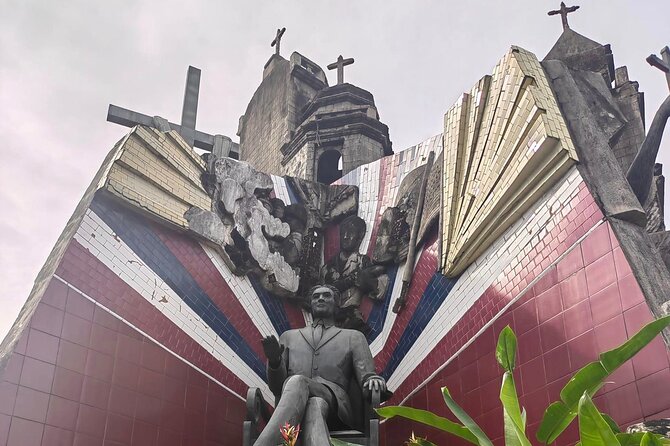
Stop 1: Heritage of Cebu Monument, where the city’s big moments become visible art
You begin with the Heritage of Cebu Monument, a site focused on Cebu’s connections to major moments in Philippine history. The monument is described as artwork in a tableau format, referencing events like the Battle of Mactan, the inauguration of Sergio Osmeña as president, and religious history tied to Cebu.
What I like about starting here is that it gives you a mental map before you start tasting and walking through the oldest layers of the city. It helps you understand why later sites matter, especially the religious landmarks.
Drawback to consider: this stop is about seeing and absorbing, not rushing. If you’re the type who wants constant eating and minimal reading, you may want to mentally treat it as a “setup stop” so it doesn’t feel like a delay.
Admission is included here, and the tour description also references a museum entrance. That means you’re not just looking at outdoor art. You should be prepared to spend enough time to take in what the site offers.
More Historical Tours in Cebu
- Cebu City: Historical Street and Food Tour
★ 4.9 · 31 reviews - Cebu Historic and Views Tour Pickup Dropoff and Lunch (private)
★ 5.0 · 26 reviews - Cebu City Heritage with Uphill Tour
★ 3.6 · 22 reviews - Cebu Steet food, historical and mountain tour
★ 5.0 · 15 reviews
Stop 2: Yap Sandiego Ancestral House, Spanish and Chinese touches in 1680s Cebu
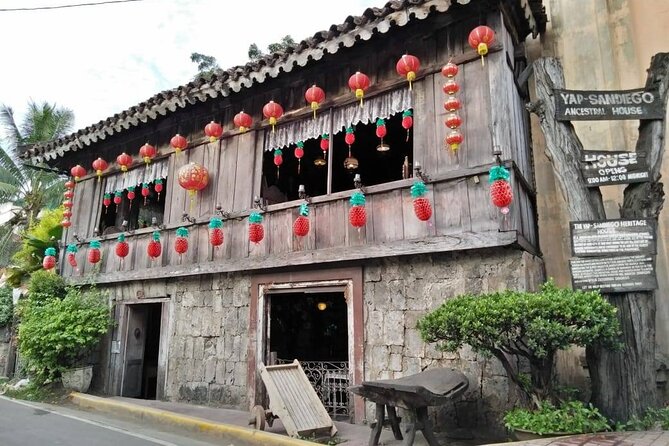
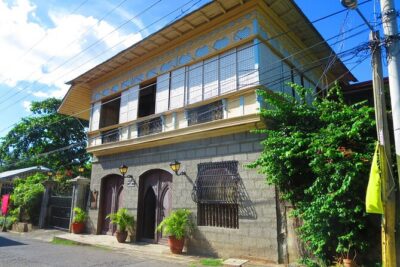
Next up is the Yap Sandiego Ancestral House, one of the oldest residential homes in the Philippines. It’s built around 1680, using wood and coral stone, and it blends Spanish and Chinese architectural influences.
This is the kind of stop that makes you notice details. Even if you’re not an architecture person, it gives context for how Cebu’s trading history, colonial era influences, and local wealth shaped the look of homes.
Time here is short, around 30 minutes. That’s enough to get the emotional feel of the place, but it won’t satisfy anyone who wants a slow, deep tour of every room.
So come with the right expectation. You’re visiting for atmosphere and context, not for a full restoration-by-restoration explanation.
Stop 3: Santo Niño Basilica and Magellan’s Cross, the religious core of Cebu
Cebu’s most famous faith landmark is the Basilica Minore del Sto. Nino de Cebu, commonly called the Santo Niño Basilica. The tour notes it was founded in 1565, giving it real weight as a centuries-old anchor for the city.
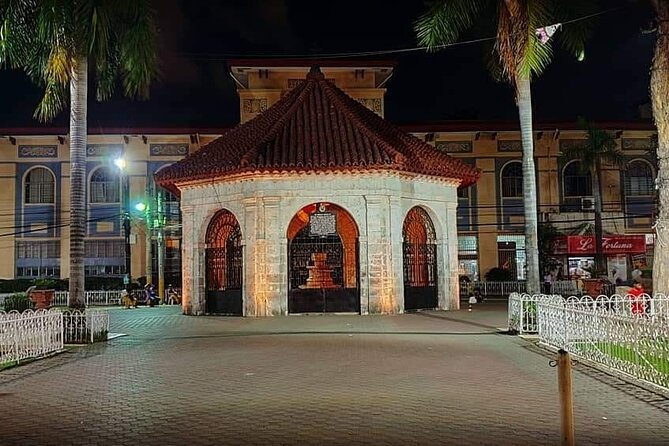
After that, you head to Magellan’s Cross Pavilion at Plaza Sugbo, beside the Santo Niño area. The cross is described as a Christian cross that was planted by explorers, and the pavilion is a stone kiosk that houses it.
These stops matter because they’re not random tourist points. They’re the reason the city developed the way it did, and they shape how locals experience Cebu every day.
A practical consideration: religious sites can be busy, and sometimes crowds change how long you comfortably spend inside. Even if admission is included, your actual time in specific rooms can vary based on what’s happening that day.
Stop 4: Cebu Carbon Market, why the name matters and how the market feels
Then you shift into the food zone at Cebu Carbon Market, a stop that gets attention for its history and its food atmosphere.
The name comes from the Spanish word carbón, meaning coal. The area is said to have been close to a coal depot used for the trains of the old Cebu Railway that ran through Cebu in the 19th century. That little detail does something useful: it turns the market from just a place to eat into a place with a background.
Food is the main event here. One theme that pops up is that the tour gives you street-food bites that you might hesitate to try on your own. That’s a real advantage in Cebu, where the best foods are often the ones you have to point to and trust the process.
One caution: a holiday or closure can change what you can eat or how long you can spend in the market area. If you’re traveling on a day with public celebrations, you may get a route tweak.
If you love markets and want maximum time just to wander, you might wish you had longer. If you’re happy to sample and move on with context, you’ll likely enjoy this stop.
The food stops: what you can expect to taste, and what might surprise you
This tour is built around street food hot spots plus cultural stops. The exact menu can vary by the day and route flow, but the overall vibe is consistent: small tastings, local favorites, and chances to try dishes that aren’t usually on standard restaurant menus.
From what people describe, you might encounter famous Cebu and Filipino items such as lechon, tuslob buwa, and even bold bites like balut. (One person also mentions not seeing balut on their run, so treat it as something you might encounter rather than a guaranteed item.)
A useful way to think about it: this tour helps you build confidence. Instead of you standing there wondering what something is or whether it’s safe, your guide brings you into the order of things.
Drawback to keep in mind: a couple of comments call the food just average. Taste is personal. If you only like familiar Western flavors, street food may feel challenging. If you like trying things you have never ordered before, this tour is much easier to enjoy.
Also, some people say they would have liked more time at the food market itself. So if your top priority is quantity, keep that in mind and consider pairing this with another short food plan later the same week.
Public transport moments, like the jeepney rides, that make the city feel alive
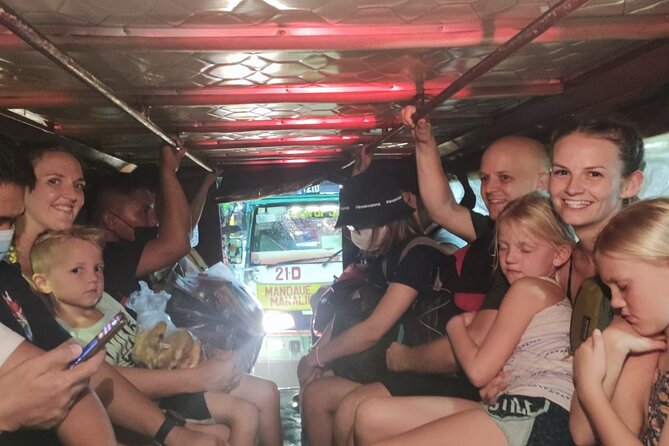
One of the things that makes this tour feel practical is that it isn’t only a walk between monuments. Some runs include a ride on a jeepney to get you from one area to another. That can be a fun and low-stress way to see how people actually move around.
Even if you’ve never taken public transport before, the guide-led format reduces the intimidation factor. You’re learning with someone who knows the flow, not guessing in the moment.
You’ll also see why the tour is timed for the late afternoon. You get a city that’s active, not empty. And you’re not trying to squeeze all this into a chaotic midday rush.
Stop 6: Cebu Metropolitan Cathedral, WWII scars and a city that keeps going
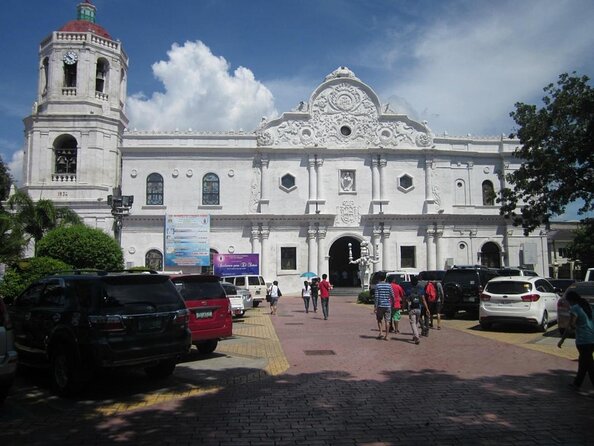
The final cultural stop is the Cebu Metropolitan Cathedral, also known as the Metropolitan Cathedral and Parish of Saint Vitalis and of the Immaculate Conception. The tour notes that during World War II, much of the cathedral was destroyed by Allied bombing.
This stop adds a different kind of depth. The earlier sites focus on early colonial era and religious anchors. Here, you get a reminder of modern history and the way the city rebuilt.
Admission is included, and it’s a solid closing point because by the time you reach the cathedral, you’ve already built a sense of Cebu’s timeline. You can connect the dots from early historical moments to the present.
From a pacing perspective, since the route ends at Freedom Park Carbon, you might want to plan how you’ll get back to your hotel after the tour. One comment specifically points out that the tour does not cover the ride back home.
Who should book this Cebu historical and food walking tour
This is a good fit if you want:
- A Cebu City overview that mixes big landmarks with local food
- A guide-led route, especially if you feel unsure about navigating on your own
- An experience that works well for solo travelers, including solo women, because the small group and guide keep things structured
- A relaxed evening plan that includes time to chat, not a rushed checklist
You might want to skip or adjust expectations if you:
- Only want food, with minimal history
- Are sensitive to trying unfamiliar foods
- Need the tour to always include a specific dish, like balut, because what you eat can vary
- Expect the tour to include transportation back to your hotel, since it focuses on food and entrances, not a return ride
Should you book it? My call based on fit and value
If your goal is to see Cebu City with context and eat your way through local favorites, this tour is a strong “first evening in Cebu” choice. The combination of included admissions, a friendly small-group pace, and street food stops makes it easier to enjoy without planning every step.
I’d book it if you’re open-minded about street food and you want a guide to handle the hard parts, like where to go and what to order.
I’d think twice if you’re price sensitive and you’re expecting nonstop food quantity, because a couple of experiences felt short or food selection felt only okay. Also, plan your post-tour ride yourself, since the itinerary ends at Freedom Park Carbon.
FAQ
How much is the Cebu City Historical and Food Walking Tour?
It costs $69.99 per person.
What time does the tour start?
The tour starts at 4:00 pm.
How long is the tour?
It runs for about 4 hours.
Where do I meet and where does the tour end?
You meet at Ayala Terraces (Ayala Terraces 8W94+H97, Biliran Rd, Cebu City) and the tour ends at Freedom Park Carbon, Cebu City.
What is included in the ticket?
Admission tickets are included for the listed stops, and the tour includes food stops as part of the experience. A mobile ticket is used.
How many people are in the group?
The group size is capped at a maximum of 20 travelers.
Does the tour run in bad weather?
The experience requires good weather. If it’s canceled due to poor weather, you’ll be offered a different date or a full refund.
Is the experience refundable if I cancel?
No. It is non-refundable and cannot be changed for any reason.
More Food & Drink in Cebu
- The Ultimate Cebu Food Tour: Local Tastes & Cultural Journey
★ 4.5 · 10 reviews - Food, Historical and Mountain Tour in Cebu City
★ 4.5 · 8 reviews - Cebu City: A Food Adventure Through City Streets
★ 2.2 · 3 reviews - Manila Food Tour: Introduction to Philippine Street Food
★ 5.0 · 417 reviews
More Walking Tours in Cebu
- Cebu City: Walking Tour
★ 5.0 · 6 reviews - Manila: Street Food and Drinks Walking Tour with Tastings
★ 4.8 · 114 reviews - Manila’s Walled City: Intramuros Walking Tour
★ 5.0 · 82 reviews - Manila: Sightseeing and Food Walking Tour with Tastings
★ 4.7 · 68 reviews
Newest reviews around Cebu
- Panoramic View of Cebu and Dinner with Night View★ 4.5 · 3 reviews
- The Ultimate Rush: Moalboal Sardine Run and Kawasan Canyoneering★ 5.0 · 3 reviews
- Whale Shark Swimming, Tumalog Falls and Kawasan Canyoneering★ 3.5 · 3 reviews
- Cebu Traditional Bamboo Cooking★ 5.0 · 3 reviews
- Island Hopping | Bantayan Island – Virgin Island★ 4.0 · 3 reviews
- Full Day Bohol Highlights from Cebu★ 5.0 · 3 reviews
- Cebu Airport Transfer to / from Anywhere in Cebu★ 5.0 · 3 reviews
- Small Group Moalboal and Badian’s Ultimate Adventure Tour★ 5.0 · 3 reviews
Historical Tours, compared.
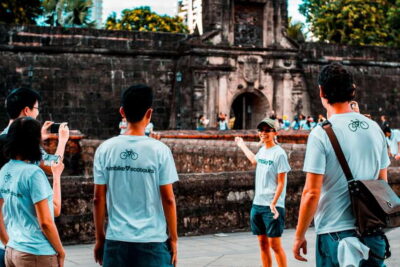
Intramuros, Manila: Historical Bamboo Bike Tour
Read our review →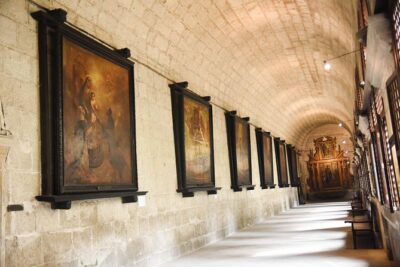
Explore Intramuros: Introduction to Philippine History
Read our review →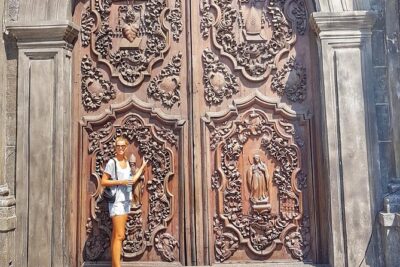
Experience Manila’s Heritage: Intramuros & More in Half a Day!
Read our review →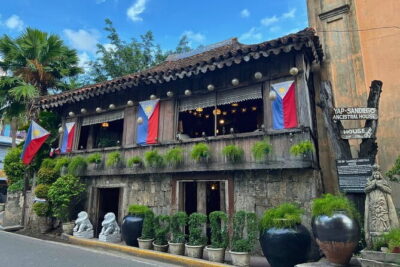
Exploring Cebu City’s rich history and Uphill Tour
Read our review →
Tagaytay, Taal Volcano & Heritage Town: A Journey of Discovery
Read our review →Browse the lists this tour appears in