
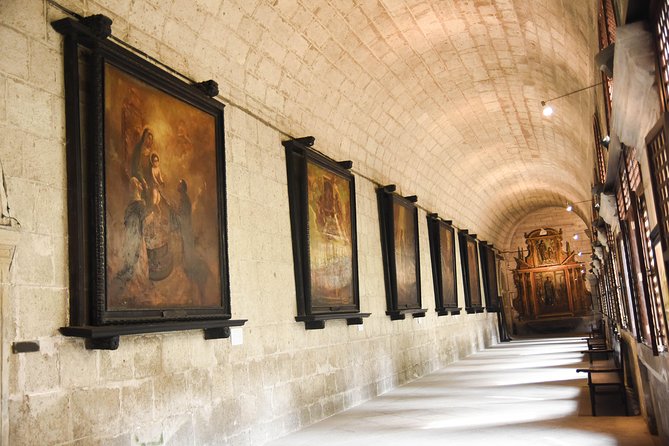
Reviewed · INTRAMUROS
Explore Intramuros: Introduction to Philippine History
If you want to understand Manila fast, this Intramuros walk is a smart way to do it. You hit big turning points of Philippine history in about 3 hours, starting right at San Agustin Church, then moving through colonial Manila and on to the WWII memory sites.
I especially like two things here: the tour includes entrance fees, so you do not have to fuss with buying tickets on the spot, and the route mixes famous landmarks with backstreet context so the walled city feels less like a photo stop and more like a story you can follow. The only drawback to plan for is that it is still a walking tour, and midday sun in Manila can be intense, so comfort matters.
Key Things I’d Focus On
- Meet at San Agustin Church on General Luna St, one of Intramuros’ easiest anchors
- Entrance fees handled ahead of time, with no surprise cash stops
- A tight 3-hour route that still covers centuries, from Spanish era to WWII
- Stops that explain daily life, not just monuments (Casa Manila is a standout)
- WW2 remembrance included, plus a look at Manila’s Catholic institutions
- Small group size (max 15) with English-speaking guides, often making it feel personal
Intramuros in a Few Hours: Why This Works for First-Time Manila Visits
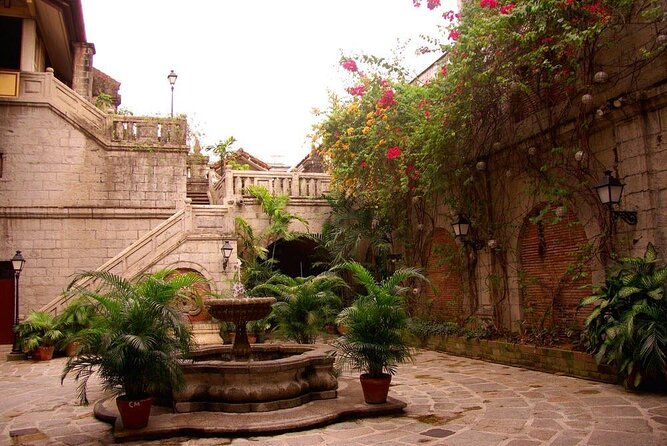
Intramuros is Manila’s “old city” within walls, and it is where a lot of the country’s layered history becomes visible in one compact area. You will see Spanish-era architecture, Catholic landmarks, and the later scars of WWII, all in an area you can actually cover without spending a full day commuting around the capital.
This tour works because it is built for orientation. You are not just collecting sights. You are learning how the same place shifted roles over time, from colonial administration to a military stronghold to a WWII memorial landscape. That gives you context for the rest of your Manila day, even if you do not know much history going in.
It is also a good fit if you like structure. The pacing is designed for a half-day commitment, with the rest of your day left open. That means you can tour in the morning or early afternoon, then stay flexible for lunch, shopping nearby, or a slower walk at your own pace.
More Historical Tours in Manila
- Intramuros, Manila: Historical Bamboo Bike Tour
★ 4.8 · 583 reviews - Experience Manila’s Heritage: Intramuros & More in Half a Day!
★ 5.0 · 76 reviews - Tagaytay, Taal Volcano & Heritage Town: A Journey of Discovery
★ 5.0 · 29 reviews
Meeting Point on General Luna St, Then a Half-Day Route You Can Actually Finish
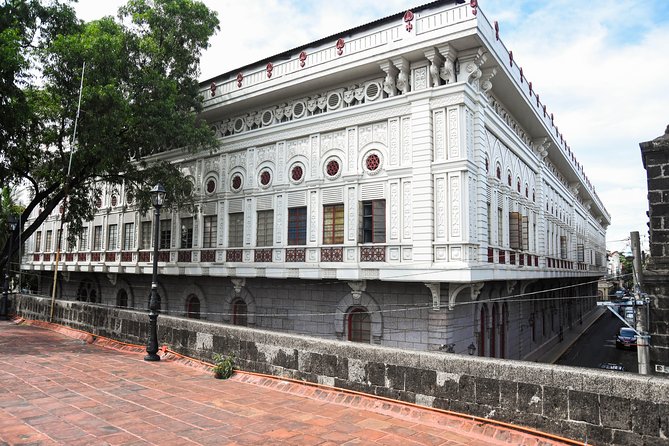
The meet point is simple: San Agustin Church on General Luna St in Intramuros. That matters because Manila can be busy, and getting lost before a tour is the fastest way to ruin your mood. When you start at a well-known church, you can arrive, check in, and relax.
The tour ends at Fort Santiago, also inside Intramuros. That is convenient because Fort Santiago is at the “next step” of the historical story. You do not need to backtrack across the area just to wrap things up.
The tour runs about 3 hours and is capped at 15 travelers. In practice, that size is what helps the guide keep things moving while still answering questions. You will also get bottled water, which sounds basic but is actually a big deal when you are walking in Manila heat.
One practical point: private transportation is not included, so plan to reach Intramuros via public transit or on foot depending on where you are staying. The tour notes that it is near public transportation, which helps.
San Agustin Church: Old Stone, WWII Survival, and a Great Start Point
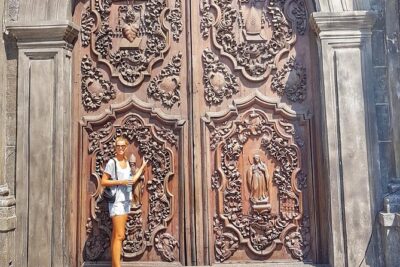
Stop one is San Agustin Church (Immaculate Conception Parish). This is not a random church stop. It is the oldest stone church in the entire country, and it is also the only survivor of the bombing of Manila during WWII.
I love starting here for one reason: the history is not abstract. The building itself holds the story. When your guide ties the architecture and the WWII survival together, it turns the church into more than a religious site. It becomes a physical landmark of how Manila endured, rebuilt, and carried forward.
What to do with this time:
- Slow down for a minute before your questions, so you can look at the church as a structure first.
- Ask how the WWII story connects to the rest of Intramuros, because your later stops will echo the same theme.
Entrance is free for this stop, and it is included in the flow so you can focus on learning instead of payment logistics.
Museo San Agustin: The Spanish Galleon Trade Story Behind the Walls
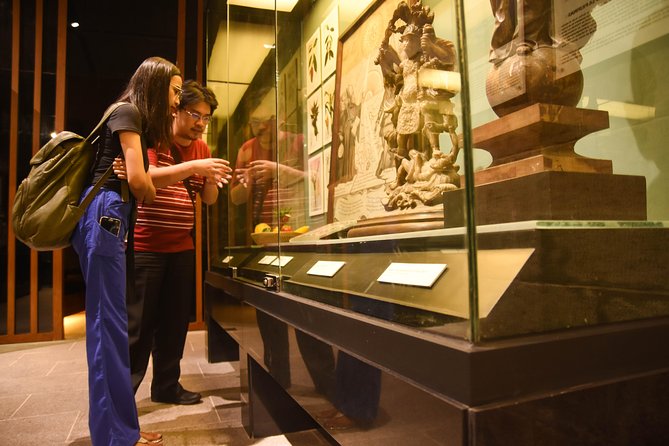
Right beside the church is the Museo San Agustin. This museum stop is about how Manila fit into the wider world through the Spanish galleon trade, a trade network that spanned far beyond the Philippines.
This is one of those stops that makes the rest of the city feel more grounded. Intramuros is often described as a walled colonial center, but the trade routes explain the engine behind that colonial economy. When you hear how ships and goods linked Manila to the broader Spanish world, you start seeing why the city developed the way it did.
You also learn about the Catholic Church’s role over the centuries, with artifacts shown across different eras. Even if you are not a museum person, this one helps you connect religion, power, and everyday life in a way that is easier than reading a textbook.
The museum visit is about 30 minutes, and admission is included. If you want one “takeaway moment,” this is it: understand Manila as a node in a global system, not just a single city block.
More of Intramuros:
- Experience Intramuros with Bamboo Bicycle – Ecotours
★ 5.0 · 508 reviews - Manila: Intramuros, Chinatown, and Old Manila Half-Day Tour
★ 4.8 · 475 reviews - Manila: Guided Sunset Bamboo Bike Tour in Intramuros
★ 4.8 · 119 reviews - Manila by Night: Discovering City Highlights with Intramuros
★ 4.5 · 70 reviews
Casa Manila: Real-World Clues About Upper-Crust Life in Old Manila
Next is Casa Manila, a turn-of-the-19th-century house where you get a recreation of what homes of the upper crust of society looked like in old Manila.
I like this stop because it shifts you from official history to social history. Forts and cathedrals tell you about institutions. Casa Manila helps you imagine the daily rhythm of wealthy households during that era. It answers the question you might not realize you have: who lived here, how did they live, and what did status look like in space and objects?
The guided time is around 30 minutes, and entrance is included. This is also a good spot to pay attention to how rooms are arranged and what kinds of household details stand out. Your guide can tie those observations back to the Spanish influence and local adaptation.
If you are traveling with teens or young adults, this stop tends to land well because it is visual and story-driven.
Memorare Manila Monument and Manila Cathedral: WWII Memory and Catholic Center Stage
After Casa Manila, the tour includes two quick but meaningful stops.
First is the Memorare Manila Monument, a monument to remember the innocent casualties of WWII. It is short, but it is one of the places where the tour’s tone becomes more reflective. You get a clearer sense of the Philippines’ role in WWII and how the war affected civilians, not just armies and leaders.
Then you move to Manila Cathedral, the seat of the Catholic Church in the Philippines. This stop is brief too, but it gives you a sense of continuity: the Catholic institutions you saw at San Agustin are not isolated. They connect to the broader religious and administrative structure of the country.
These two stops are each about 10 minutes. That timing is intentional. They are quick context anchors, then you move forward to the site where independence history becomes physical and dramatic.
Fort Santiago: The Independence Story You Can Walk Through
The tour’s final stop is Fort Santiago, an old Spanish military fort in Intramuros. This is where you really feel like you are at the “action” layer of history.
You learn about one of the Philippine heroes and the movement for independence from Spain. Even if you already know the headline story, seeing it from inside the fort helps. Forts are designed for control, and understanding that physical purpose makes the independence movement feel less like a page in a book and more like a response to real constraints.
This stop lasts about 30 minutes, and admission is included. I recommend using this time actively:
- Ask your guide what made the fort strategically important.
- Look at the fort as a system, not just a set of walls.
Ending here also gives you a natural stopping point. You can linger if you have energy, or you can transition to your own afternoon plans without dragging the tour group along.
Guides, Small Groups, and the “Personal” Feel You’ll Actually Notice
The tour includes an English-speaking guide, and the group size is capped at 15 travelers. That cap is what often turns a normal history walk into something you remember.
Guides like Jian, Patrick, and Jerome are repeatedly mentioned for bringing the material to life. What you can expect is a mix of solid history, practical explanations, and humor that keeps the pace from turning into a lecture. One solo traveler even got a nearly private experience when they ended up being the only guest that day, which meant the guide could slow down and add extra context.
You will also get small “real travel” perks baked in, like bottled water and the ability to take a break during the 3-hour window. That matters because comfort keeps you engaged, and you want your brain fresh for stories that span centuries.
If you enjoy asking questions, this kind of guided structure tends to reward you. You are not stuck holding questions until the end.
Price and Value: Why $55 Can Be a Good Deal in Intramuros
At $55 per person, this is not a free stroll. The value comes from what is included and how much ground you cover without logistical hassle.
Here is what you get that you would otherwise spend time and money on:
- All entrance fees are taken care of
- English-speaking guide
- Bottled water
- A route that covers multiple major stops, including museum time and a fort visit
In Intramuros, individual entry fees and the effort of coordinating multiple sites can add up quickly. By bundling the essentials into the tour, you trade a chunk of money for less friction and more learning time. For a first-time visit, that trade is often worth it.
Also, the tour is designed as a half-day history orientation. If you were planning to wander for three hours anyway, the guide essentially upgrades that wandering into a curated learning route. You still have time after the tour to do your own thing.
Timing and Weather Tips for a Better Walk Inside the Walls
This experience requires good weather, which is a polite way of saying you do not want rain turning a walking route into a slippery shuffle.
Plan for Manila conditions:
- Wear comfortable shoes. Intramuros streets are walkable, but it is still walking.
- Bring sun protection. Even in cooler months, you will feel the sun in open stretches.
- If you need a slower moment, you can usually ask your guide for a quick breather, and having water included makes that easier.
A smart strategy is to do this when you have the most energy, then use your free afternoon for the parts of Intramuros that match your interests, like religious sites, photography, or extra lingering at one location that stood out to you.
Who This Tour Fits Best, and Who Might Want Something Different
This Intramuros history introduction is a great match if you:
- Are visiting Manila for the first time and want quick orientation
- Want a guided route that covers Spanish influence, Catholic institutions, and WWII memory
- Prefer small groups and a guide who can adapt to questions
- Have only half a day and want the rest of your day flexible
You might consider a different option if you:
- Hate walking tours in heat and would rather take taxis between sites
- Want an ultra-deep, museum-heavy day with long stays at fewer places
- Already know all the history and want a more specialized theme
For most people, though, this is a practical sweet spot: enough stops to understand the place, enough time to think, and enough structure to feel like you did something meaningful without draining your whole day.
Should You Book Explore Intramuros: Introduction to Philippine History?
If you want a guided way to understand Manila’s layers in a compact area, I’d book it. The biggest reason is the combination of high inclusion value (entrance fees and guide) and a route that tells a connected story, from San Agustin Church to Fort Santiago, with WWII remembrance and social context in between.
If you are the type of traveler who likes crisp explanations, a bit of humor, and asking follow-up questions, this tour is made for you. Just bring comfortable shoes, take the water seriously, and plan your day around the fact that you will still have the rest of your afternoon free.
FAQ
What is the duration of the Intramuros history tour?
The tour lasts about 3 hours.
How much does it cost per person?
The price is $55.00 per person.
Where do I meet the guide?
You meet at San Agustin Church on General Luna St, Intramuros, Manila.
Where does the tour end?
The tour ends at Fort Santiago inside Intramuros.
How big is the group?
The tour has a maximum of 15 travelers.
Is the guide English-speaking?
Yes, the tour includes an English speaking guide.
Are entrance fees included?
Yes. All entrance fees are included, and you do not need to pay on the spot.
What’s included besides the guide?
Bottled water and all entrance fees are included.
What happens if the weather is poor?
This experience requires good weather. If it is canceled due to poor weather, you will be offered a different date or a full refund.
What is the cancellation policy?
You can cancel up to 24 hours in advance for a full refund. Canceling less than 24 hours before the start time is not refunded.
Newest reviews around Manila
- TAGAYTAY DAY TOUR FROM MANILA★ 5.0 · 3 reviews
- 3 Days Private Tour in Banaue Ifugao visiting Batad Rice Terraces★ 3.5 · 3 reviews
- 4 Day Banaue Ifugao Rice Villages Private tour Trekking★ 4.5 · 3 reviews
- Bites and Sights: Tagaytay Food and Nature Excursion from Manila★ 4.0 · 3 reviews
- Embark on a 7-Day Banaue-Sagada Adventure of a Lifetime★ 5.0 · 3 reviews
- Philippines Intro 3 days 2 nights Tour Best of Manila and Beyond★ 5.0 · 3 reviews
- Tagaytay: Taal Volcano Tagaytay Private Tour w/Jeepney Ride★ 5.0 · 3 reviews
- Following the Footsteps of Anthony Bourdain★ 5.0 · 3 reviews
Intramuros, compared.
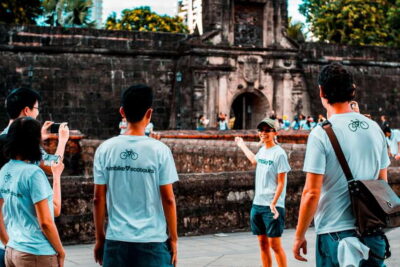
Intramuros, Manila: Historical Bamboo Bike Tour
Read our review →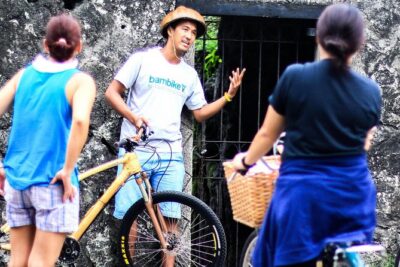
Experience Intramuros with Bamboo Bicycle – Ecotours
Read our review →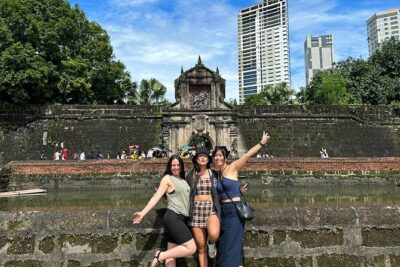
Intramuros, Chinatown, and Old Manila Half-Day Tour
Read our review →
Manila Old and New: Sightseeing Tour Including Intramuros and Fort Santiago
Read our review →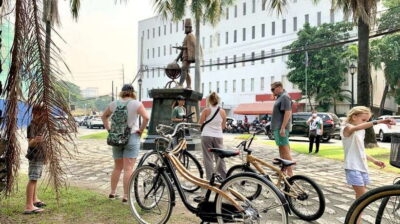

Experience Manila’s Heritage: Intramuros & More in Half a Day!
Read our review →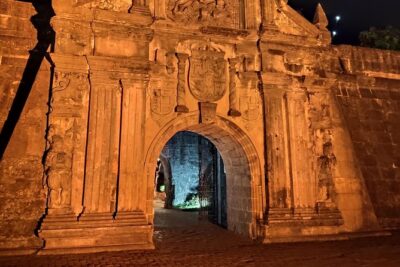
Manila by Night: Discovering City Highlights with Intramuros
Read our review →Browse the lists this tour appears in