
Reviewed · INTRAMUROS
Manila’s Walled City: Intramuros Walking Tour
Intramuros has a special feel because the walls make the story of Manila feel physical, not just something you read in a guidebook. This half-day walking tour keeps you moving through the turning points of the city, with stops tied to Spanish rule and the national hero Dr. José Rizal, plus big landmarks like San Agustin Church. You get a clear route that helps the different eras of Manila click into place.
Two things I like a lot: the English-speaking local guide (some guides, like Andre or Ann, bring energy and humor and use simple visual aids), and the mix of “must-see” sites with the quieter learning stops like Rizal Shrine. One thing to plan for is the dress rules at places of worship and selected museums, plus the heat and moderate walking in a tropical climate.
Key things to know before you go
- Small group size (up to 30 travelers) keeps the pace friendly and questions easy to answer
- Admissions are built in for major stops, including Fort Santiago, Rizal Shrine, and Casa Manila
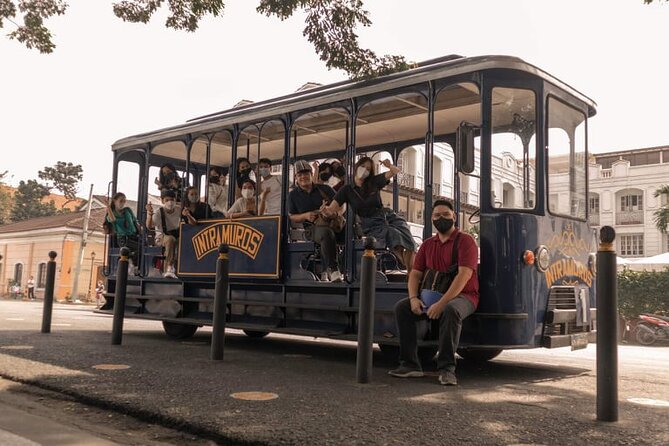
- A kalesa or tranvia loop breaks up the walking and helps you see more of the walled city in a relaxed way
- Street-snack style breaks plus bottled water keep you comfortable during the walk
- A focused, time-managed route means you hit the big historical landmarks without feeling lost
- Church and museum dress code rules can affect entry, so plan your outfit before you arrive
Why Intramuros feels different from the rest of Manila
Intramuros is compact, and that’s the point. When you walk its lanes and squares, you can sense how Manila was shaped by defense, religion, and politics, long before cars and traffic took over.
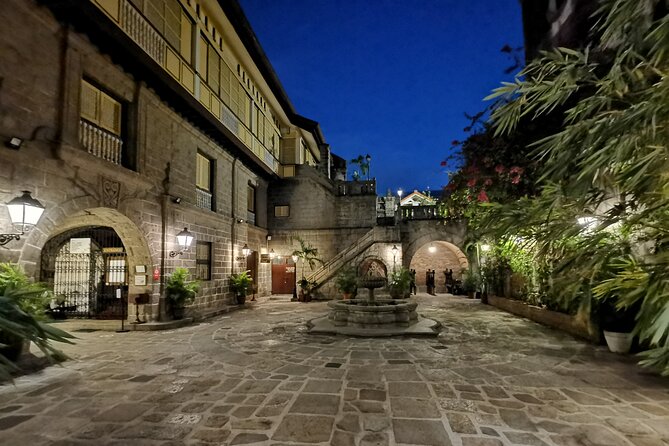
On this tour, the route is designed like a guided story. You start at a major military site, move to the place tied to Rizal, then swing by religious and civic landmarks before ending at Casa Manila, where daily life under Spanish rule gets explained in a museum format.
If you enjoy history that has names and specific places, this tour fits you well. You are not stuck staring at one plaque. You walk, you look, and your guide connects each stop to the bigger picture of how Manila changed across multiple eras.
More of Intramuros:
- Manila Old and New: Sightseeing Tour Including Intramuros and Fort Santiago
★ 4.5 · 377 reviews - Express Bamboo Bike Tour inside Intramuros
★ 4.5 · 66 reviews - Manila: Intramuros, Chinatown, and Old Manila Half-Day Tour
★ 5.0 · 37 reviews
Price and value: what $35 covers in practical terms
At $35 per person, you are paying for more than “someone to walk with you.” You are covering a guided route through Intramuros, plus bottled water and snacks so you are not scrambling for food mid-tour.
The best value angle is that key admissions are included. Fort Santiago has an included admission ticket, Rizal Shrine includes admission, and Casa Manila includes admission too. That matters because those are not just quick photo stops, they are sites where time inside makes a difference.
Other stops are free, like Manila Cathedral, the Memorare Manila 1945 Monument, and San Agustin Church. So even if some parts are outside or quick, the paid portions are doing the heavy lifting for your learning.
You also get a choice of departures, morning or afternoon. That’s useful in Manila, because weather and heat can shift your day. If you want the softer light for photos, the afternoon option may feel easier.
The exact flow: your 3 hours 30 minutes in Intramuros
This is a half-day tour, about 3 hours 30 minutes. It is described as a moderate amount of walking, which is important because Intramuros is not tiny enough to stroll endlessly without breaks.
The tour works best when you arrive ready to walk and listen. Your guide keeps the timing tight, so you are not hanging around waiting for the group to regroup.
The route also avoids a common problem in historic areas, where you wander in circles. Here, the order matters, and it helps you understand why each site is where it is.
Fort Santiago: the big defense stop that sets the tone
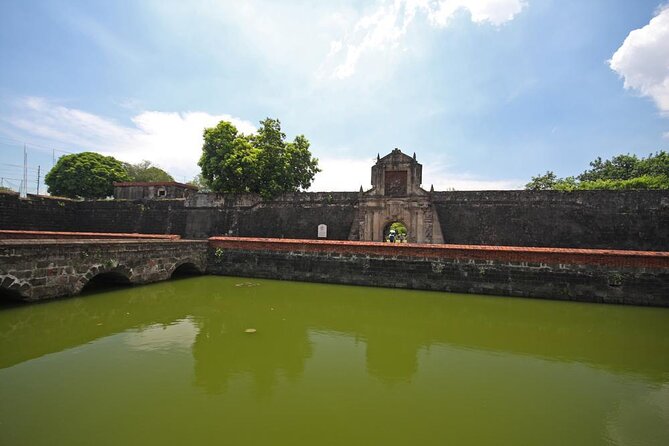
You start at Fort Santiago, and the timing is generous, about 1 hour with an admission ticket included. Fort Santiago is tied to the Spanish founding of Manila. It was first built under Spanish navigator and governor Miguel López de Legazpi for the new established city.
This first stop is valuable because forts are not just background. They explain why Intramuros developed the way it did. Defense shaped street patterns, access points, and even the mindset of the city.
One practical thing to know: since you spend a full hour here, it helps to show up with the willingness to slow down for details. You will get more out of it if you pause, read, and ask questions, not just take a few quick photos.
More Walking Tours in Luzon
- Manila Intramuros Walking tour with Local Tour Guide
★ 5.0 · 33 reviews - Intramuros & Chinatown Manila Tour – Walking, Food & Culture
★ 4.5 · 32 reviews - Manila: Binondo Walking Tour ( Oldest Chinatown )
★ 5.0 · 30 reviews - Intramuros Walking Tour: Explore the Manila’s Walled City|Private
★ 5.0 · 9 reviews
Rizal Shrine: where you learn why 1896 still matters
Next is the Rizal Shrine, about 30 minutes, with an admission ticket included. José Rizal was imprisoned here before his execution in 1896.
This stop is the emotional core of Intramuros for many visitors. You are not only seeing old walls. You are connecting a person’s story to a place, and that is where history becomes personal.
The shrine museum displays memorabilia tied to Rizal, and that kind of physical collection helps you remember the details later. If you care about learning the “why” behind Philippine nationalism, this is the place to give extra attention.
If you have limited time in Manila, this 30-minute segment is a smart use of your hours. It is specific, meaningful, and well-sized so you do not feel rushed.
Manila Cathedral: a quick stop with big spiritual weight
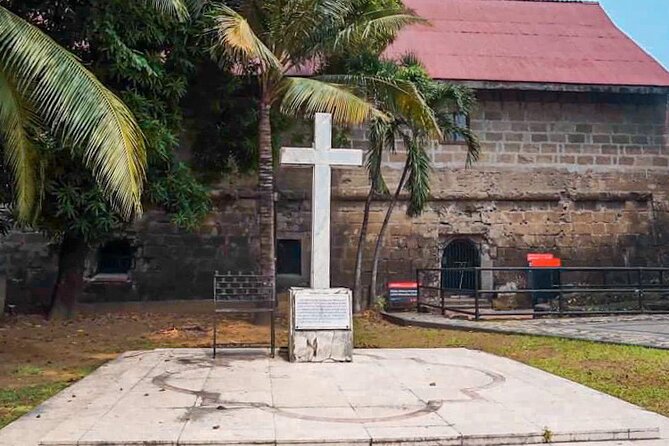
After Rizal Shrine, you visit Manila Cathedral for about 20 minutes. Admission here is free, and the stop includes time at the Minor Basilica and Metropolitan Cathedral of the Immaculate Conception, also known as Catedral de Manila.
This is a shorter stop, but it is not random. It anchors the Spanish-era religious side of Intramuros. Even if you are not a church-history person, it helps to see how central religion was to colonial city life.
The practical consideration: because it is a place of worship, the tour states that there is a dress code for entry to churches and selected museums. Plan your outfit accordingly, or you may be refused entry.
Kalesa or tranvia loop: where your legs get a break
At one point in the route, you take a kalesa (horse-drawn carriage) or a tranvia (tram) ride around Intramuros. The itinerary does not list exact minutes here, but the purpose is clear: it gives you a relaxed way to cover more ground.
I like this part because it changes the pace. You still see the city, but you are not continuously walking on uneven historic surfaces. It also tends to create more natural photo moments, since you can look outward and capture views without stopping your feet every minute.
If you are traveling with kids or anyone who gets tired on long walks, this ride is a relief. It also helps you get your bearings fast, which can make the rest of the stops feel easier to follow.
Memorare Manila 1945 Monument: remembering the battle for liberation
You then spend about 20 minutes at the Memorare Manila 1945 Monument, with admission free. This monument commemorates lives lost during the battle for liberation of Manila, fought by Filipino and American forces against Imperial Japanese troops, dated 1945.
What makes this stop worth your time is how it adds context. Intramuros is often described through Spanish-era ruins and colonial architecture, but Manila’s story includes World War II too.
A quick tip: if you want to understand the layers of the city, use this stop to connect past defenses to later conflict. Your guide is likely to frame it as part of how Manila repeatedly rebuilt itself.
San Agustin Church: a UNESCO World Heritage site stop
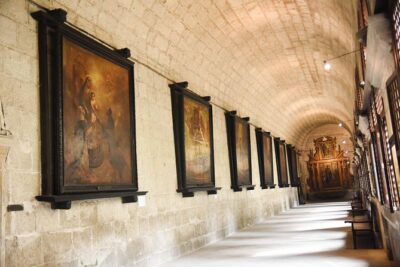
Next is San Agustin Church – Immaculate Conception Parish, around 15 minutes, with admission free. The church was completed in 1607 and is one of the great churches from the Spanish colonial period.
San Agustin is listed as a UNESCO World Heritage Site under the collective title of Baroque churches in the Philippines. Even in a short visit, it can be visually powerful, and the short time is helpful if you are balancing multiple paid and free stops.
Again, dress code matters here. The tour notes that no mini-shorts or sleeveless tops are allowed, and entry can be refused if you do not meet the requirements.
If you are the kind of visitor who enjoys architecture and sacred spaces, this is a high-impact, low-time stop.
Casa Manila: the museum that explains daily colonial life
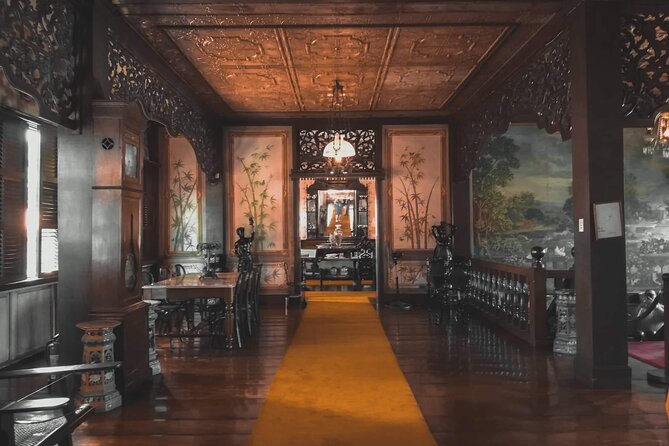
You finish with Casa Manila, about 30 minutes. Admission is included here, and the tour ends at Casa Manila’s location in Intramuros.
Casa Manila is a museum showing colonial lifestyle during Spanish colonization. The building itself is described as an imposing stone-and-wood structure around 1850, representing the kind of grand houses found in Barrio neighborhoods.
This is the stop that often makes the tour “stick” after the walking ends. Forts and shrines are essential, but museums like Casa Manila help you picture what people actually did inside those walls, not just what events happened to them.
If you want a smooth ending, Casa Manila is a good choice because you are not rushed out immediately after your last stop. You can continue looking around on your own after the tour time if you have energy.
Snacks, bottled water, and pacing in tropical Manila
The tour includes bottled water and snacks, and that is a real benefit in Manila. Walking in the sun adds up fast, and having refreshments built into the schedule keeps you from turning the tour into a hunt for food.
The snacks are described as simple. In practice, the snack breaks can include street-food style items like taho and ice cream, which can be a fun way to taste something local without derailing your timeline.
Pacing is also a strong point. The tour is set up so teens and even younger kids can keep up, as long as they are comfortable with moderate walking. The group size is capped at 30 travelers, which helps the guide manage timing and attention.
Who this walking tour suits best
This tour is a great fit if you want a structured route through Intramuros without spending your limited energy deciding what to see next.
It also suits you if you like guides who bring the story alive with humor and clear explanations. Many guides associated with this tour are known for energetic delivery and simple visual aids that make the timeline easier to follow.
It may be less ideal if you dislike churches or museums, because you do spend time at Manila Cathedral and San Agustin Church, plus you visit Casa Manila. It may also be tougher if your mobility is limited, since the tour includes a moderate amount of walking.
Should you book the Intramuros Walking Tour?
Book it if you want your Intramuros visit to feel organized, meaningful, and cost-effective. For $35, you get a guided route, bottled water and snacks, and admission tickets at several major sites, not just window-shopping.
You should think twice if your outfit does not meet the dress code for places of worship and selected museums, or if you know you will struggle with moderate walking in tropical heat.
If you are trying to understand Manila beyond postcards, this is a smart way to do it. Intramuros can feel like a pile of old stone. This tour turns it into a clear timeline, step by step.
FAQ
How long is the Manila’s Walled City: Intramuros Walking Tour?
It runs about 3 hours 30 minutes (approx.).
What does the $35 price include?
The tour includes bottled water, snacks, and an English-speaking local tour guide. Some attraction admission tickets are also included.
Are any attractions on the route free?
Yes. Manila Cathedral, the Memorare Manila Monument, and San Agustin Church are listed as free stops.
Which stops include admission tickets?
Admission tickets are included for Fort Santiago, Rizal Shrine, and Casa Manila.
Do I get a kalesa or tram ride during the tour?
The itinerary includes a kalesa (horse-drawn carriage) or a tranvia (tram) ride around Intramuros.
Is hotel pickup or drop-off included?
No. Hotel pick-up and drop-off are not included.
Is there a dress code?
Yes. A dress code is required for places of worship and selected museums. No mini-shorts or sleeveless tops are allowed.
What is the cancellation policy?
Free cancellation is available if you cancel at least 24 hours in advance for a full refund. If you cancel less than 24 hours before the start time, the amount paid is not refunded.
Newest reviews around Luzon
- Explore the northern mountains of Sagada 3days 2 nights from Manila ***★ 4.5 · 3 reviews
- Private Airport Transfer Manila to Hotel in Manila or vice versa★ 5.0 · 3 reviews
- Sagada and Banaue Rice Terraces 4-Day Tour★ 5.0 · 4 reviews
- Manila Social and Political Walk★ 5.0 · 4 reviews
- Day Hike: Mount Daraitan plus Tinipak River start point Manila** updated 2022★ 5.0 · 4 reviews
- The Jeepney & Tuk Tuk Adventure ride with Local Guide★ 4.5 · 4 reviews
- Angeles City / Clark Airport to La Union (Bauang, San Fernando, San Juan)★ 3.5 · 4 reviews
- Personal Tour Guide in Manila Philippines★ 5.0 · 4 reviews
Intramuros, compared.
Intramuros, Manila: Historical Bamboo Bike Tour
Read our review →
Experience Intramuros with Bamboo Bicycle – Ecotours
Read our review →
Intramuros, Chinatown, and Old Manila Half-Day Tour
Read our review →
Manila Old and New: Sightseeing Tour Including Intramuros and Fort Santiago
Read our review →
Explore Intramuros: Introduction to Philippine History
Read our review →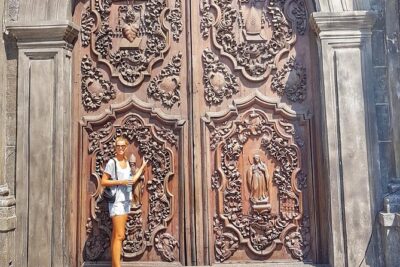
Experience Manila’s Heritage: Intramuros & More in Half a Day!
Read our review →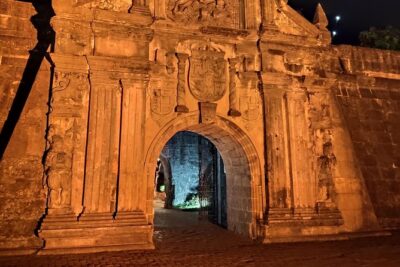
Manila by Night: Discovering City Highlights with Intramuros
Read our review →Browse the lists this tour appears in