
Reviewed · HISTORICAL TOURS
Full-Day Historical Heritage Guided Tour of Tacloban and Palo
Tacloban and Palo get packed into one day, with your route built around WWII landmarks and Super Typhoon Haiyan recovery stories, told through local places and people. You’ll move from memorials tied to the Leyte Gulf campaign to quiet reminders of the 2013 storm, with the Waray culture threaded through it all.
I really like two parts of this experience. First, the guide style, including Kuya Jeff, is friendly and makes the history feel personal, not just dates on a wall. Second, I like how the itinerary blends churches, museums, and memorials with the human side of what happened and how people rebuilt after the tragedy.
One heads-up for your planning: the stops are time-boxed, so you will be doing a lot of short visits and photo stops in about 6-7 hours, and the experience runs best in good weather.
Key things to know before you go
- Private tour for your group with a direct route through Tacloban and Palo, not a big shared scramble
- Pickup offered plus an air-conditioned vehicle, which matters in the heat between quick stops
- Lunch included, so you can focus on the sites instead of hunting for food
- Sto. Nino Shrine and Heritage Museum includes admission, with art tied to the Marcos era
- Haiyan reminders are specific, including the M/V Eva Jocelyn Shrine and what that ship represents
- Most sites have no admission fees, so your included value goes further
Palo and Tacloban in one day: why this route works
This is the kind of day trip that makes sense if you want context fast. You start at 8:30am, then spend about 6-7 hours moving between Tacloban City and nearby Palo in an air-conditioned vehicle. It is not a long-stay, slow wandering kind of plan. It is a focused heritage loop, built for learning while still seeing a lot of recognizable landmarks.
Because it is private, you are not sharing your guide with strangers who pull everyone off track. That helps when the guide pauses to explain what you are looking at, or when you want to ask questions. You also get a mobile ticket, and pickup is offered, which keeps the morning simple.
The real payoff is that you do not just see World War II sites in a vacuum. You also see the way later generations experienced Haiyan, and how recovery shows up in monuments, churches, and community memory. That combo can be heavy, but it also gives the day emotional balance.
More Historical Tours in Visayas
- Intramuros, Manila: Historical Bamboo Bike Tour
★ 4.8 · 583 reviews - The Original Cebu City Historical and Food Walking Tour
★ 4.5 · 81 reviews - Explore Intramuros: Introduction to Philippine History
★ 5.0 · 80 reviews
Sto. Nino Shrine and Heritage Museum: art, politics, and place
Your first stop is the Sto. Nino Shrine and Heritage Museum, where you get 30 minutes and the museum admission is included. This is the place to start because it sets a tone for how history is stored in objects, buildings, and family-linked narratives.
One detail worth knowing before you go in: the museum includes art collections gifted to the Marcos family during the time of the late President Ferdinand Marcos Sr. Even if you are not looking for political history, you’ll likely find yourself thinking about why collections move, who collects them, and how museums can become part of a national story.
What I find useful here is how quickly the guide can help you connect what you see to the larger heritage themes of the day. If you care about how power, memory, and culture overlap, this first stop is a strong opener.
Practical tip: treat this as your “mental warm-up.” Take a few minutes to settle in, then let the rest of the route build from there.
Leyte Gulf and MacArthur Landing Memorial: the WWII pivot point
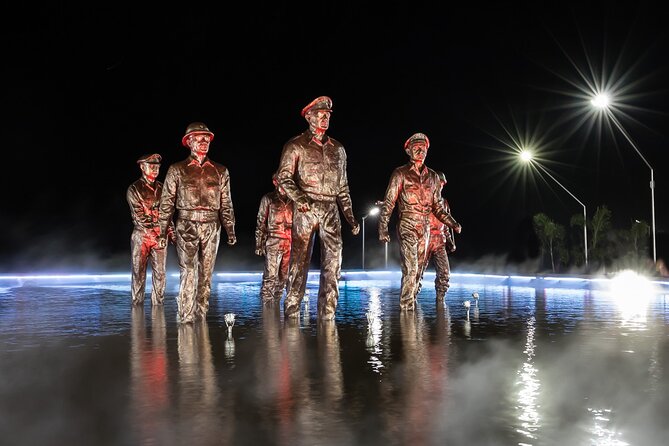
Next up is the Leyte Landing Memorial. It is a short visit, about 15 minutes, and the admission is free. This is tied to the landing of Gen. Douglas MacArthur in Leyte Gulf, part of the campaign to liberate the Philippines from Japanese occupation, which led to the largest naval battle in the area.
If you have ever felt like WWII history tours can be too abstract, this stop is a good fix. You are standing at a site meant to mark a turning point, so the story gets grounded fast. The guide typically helps you connect the location to the broader war narrative, and you can usually get your bearings in a few minutes.
Since your time here is limited, focus on the “what this place remembers” layer. If you want photos, aim for a clean frame quickly, then listen. You will understand the significance better after the guide explains it.
Palo Cathedral: when a church became a hospital
In Palo, you visit the Metropolitan Cathedral of Our Lord’s Transfiguration, commonly called the Palo Cathedral. It is another 15-minute stop, with no admission fee.
During World War II, the cathedral was converted into a hospital for wounded Allied forces soldiers. That detail changes how you look at the building. You are not just seeing architecture. You are seeing a space that switched roles under extreme pressure.
This is the kind of stop where even a brief visit can land, because churches tend to be familiar across the Philippines, yet the wartime use is a stark reminder. If you like history that feels human and concrete, spend your short time here letting the guide’s explanation do the work.
I also like that the stop is quick enough that you do not get museum fatigue before the Haiyan part of the day.
M/V Eva Jocelyn Shrine: a Haiyan story anchored to one ship
Now you shift from WWII into Super Typhoon Haiyan remembrance, and it gets real fast.
The M/V Eva Jocelyn Shrine is a 15-minute stop with no admission fee. Here, the focus is specific: 17 ships ran aground during the onslaught of Haiyan, and M/V Eva Jocelyn is one of them. You’ll hear that the ship was pushed into the middle of a street by the water surge.
This kind of “one object, one story” approach can be easier to process than trying to absorb everything about a huge disaster at once. You get a concrete reference point, and the guide’s telling helps you understand why that matters to community memory.
Photo note: this is often a place where you may feel hesitant to rush. Give yourself a moment to look, then take photos if you want. A good guide helps keep the tone respectful.
Tacloban City Hall and Leyte Provincial Capitol: government under change
Two more quick but meaningful stops follow: Tacloban City Hall and the Leyte Provincial Capitol Building.
Tacloban City Hall is on a hill, and it is a great spot for picture taking that highlights Cancabato Bay. The stop is about 15 minutes and admission is free. It’s a nice break in the middle of heavy historical content, because you get a sense of how the city sits and what people built around.
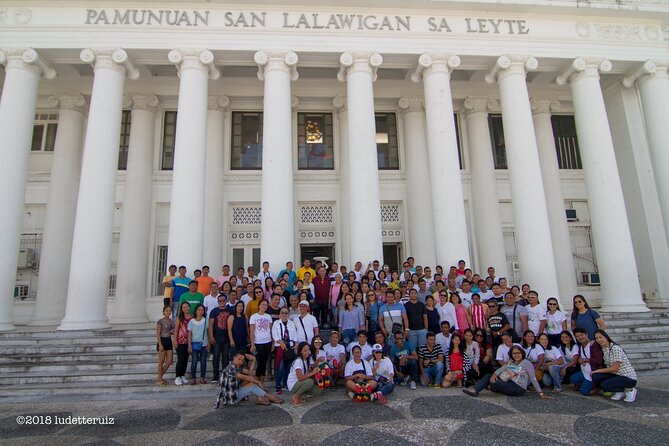
Then you move to the Leyte Provincial Capitol Building in Tacloban City. This one matters for timeline reasons. It served as the seat of government of Leyte until 2019, and during World War II it also served as the seat of the Philippine Commonwealth government from October 23, 1944 to Feb. 25 (as listed for the period on site information).
Even if you do not memorize the dates, the “layers” idea clicks quickly. You see how buildings get repurposed when the political map changes.
If you are the type who loves civic history, these two stops are a solid payoff for the short time investment.
San Juanico Bridge and Madonna of Japan: connection and peace memory
Your route then includes two iconic reminders, both free and about 15 minutes each.
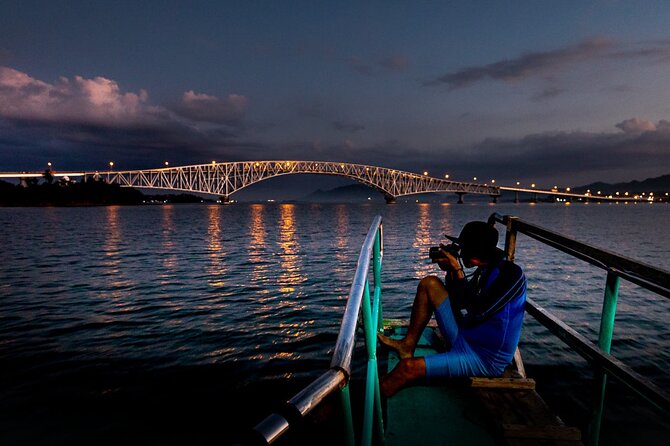
First, San Juanico Bridge. It was once the longest bridge in the Philippines at 2.16 kilometers, spanning seawater between Leyte and Samar. It is also described as Leyte and Samar’s iconic site, so your guide usually frames it as a connection point, not just a photo stop.
Next is Madonna of Japan, a monument meant as a symbol of peace between Filipinos and Japanese people. It was erected 33 years after WWII, honoring soldiers who fought and died in battle. That timing detail matters because it shows remembrance as something that continues long after the war ends.
I like pairing these two stops because they hit two different types of meaning. One is physical connection across water. The other is human connection through a peace message. Together, they make the overall day feel less like only crisis history.
Sto. Nino Church in Tacloban: a landmark that endured
The final heritage stop is Sto. Nino Church in Tacloban City, also free and about 15 minutes.
This is described as another historical landmark that has battled a few typhoons and earthquakes over time. During Super Typhoon Haiyan, it was partially damaged, but the church provided cover for people, which is the key part of the story.
This stop can be emotionally heavier than it sounds, because the point is not damage for damage’s sake. It is how a community landmark can become protective during disaster moments.
If your day already includes WWII and the Haiyan ship shrine, this church stop works as a final “how people live with memory” note. It is a reminder that heritage is not only what survived the past. It is also how people used it when the next storm hit.
Lunch and timing: how to make the 6-7 hours feel easier
This tour includes lunch, which I consider a real value-add on a day like this. You do not want to waste your main learning hours stopping for food or waiting for a restaurant. With lunch covered, you can keep your energy up between quick stops.
The itinerary is mostly 30 minutes or 15 minutes blocks. That means you should go in ready to absorb lots of information without expecting a long sit-down at any single site. A good strategy is to pick one or two stops you personally care about most, then treat the others as “context builders.”
Also, plan for good weather. The experience notes it runs best with good conditions, and if weather is poor it can be canceled with a reschedule or a full refund. If you are visiting during a rainy season, it is worth keeping flexibility.
Price and logistics: what you get for about $51
At $51.00 per person, this is not trying to be a budget “just drive around” tour. You get an air-conditioned vehicle, pickup offered, a private group setup, and lunch included.
Value-wise, the admission mix helps. The museum at Sto. Nino Shrine and Heritage Museum includes admission. The World War II and other heritage sites listed in the route are described as free entry. So a good chunk of what you would otherwise pay at individual stops is already built in.
One more practical plus: you receive a mobile ticket, so you are not scrambling for printed vouchers.
Who it suits best:
- If you want WWII and Haiyan context in one day, with a guide tying it together
- If you enjoy guided explanations more than reading alone
- If you prefer a private plan with pickup, rather than using public transport back and forth on your own
Who might want to think twice:
- If you hate quick stops, rushed photo moments, or you need lots of downtime between locations
- If you are extremely sensitive to emotionally heavy topics related to war and disaster
Should you book this tour?
I would book it if you want a guided day that connects Tacloban and Palo’s heritage to the bigger stories of WWII and Super Typhoon Haiyan, without forcing you into a huge, multi-day itinerary. The strongest reason is the way the day uses real places and a friendly guide, including Kuya Jeff, to translate history into something you can actually picture and understand.
Choose a different option if you are looking for a slow paced, deep museum-style schedule. This one is structured for movement and short, meaningful stops.
If your top goal is to get the “why this matters” behind Leyte Gulf, Palo Cathedral, Haiyan shipwreck memory, and the civic landmarks of Tacloban, this tour is a solid use of your time in Eastern Visayas.
FAQ
What time does the tour start?
The tour starts at 8:30am.
How long is the Tacloban and Palo historical heritage tour?
It lasts about 6-7 hours including travel time between stops.
Is this tour private?
Yes. It is a private tour/activity, and only your group participates.
Is pickup included?
Pickup is offered, and the tour uses an air-conditioned vehicle.
What is included in the price?
The tour includes an air-conditioned vehicle and lunch.
Are there entrance fees at the stops?
One stop, Sto. Nino Shrine and Heritage Museum, has admission included. The other listed attractions are described as free entry.
Does the tour require good weather?
Yes. The experience requires good weather. If it is canceled due to poor weather, you’ll be offered a different date or a full refund.
How do mobile tickets work?
The tour includes a mobile ticket.
What is the cancellation policy?
You can cancel for a full refund up to 24 hours before the experience’s start time.
Is the guide able to accommodate most travelers?
The information says most travelers can participate, and service animals are allowed.
More Full-Day Tours in Visayas
- Full-Day Private Siquijor Island Tour
★ 3.5 · 3 reviews - From Puerto Princesa: Underground River Full-Day Trip
★ 4.5 · 1,039 reviews - Spectacular Manila to Tagaytay: Full-Day Sightseeing Tour
★ 5.0 · 349 reviews - Full-Day Manila City, Tagaytay Taal Volcano and Lake Tour
★ 4.3 · 139 reviews
Newest reviews around Visayas
- Full-Day Private Siquijor Island Tour★ 3.5 · 3 reviews
- BOHOL ATV Tour★ 4.0 · 9 reviews
- Siquijor Land Tour★ 4.5 · 12 reviews
Historical Tours, compared.
Intramuros, Manila: Historical Bamboo Bike Tour
Read our review →
The Original Cebu City Historical and Food Walking Tour
Read our review →
Explore Intramuros: Introduction to Philippine History
Read our review →
Experience Manila’s Heritage: Intramuros & More in Half a Day!
Read our review →
Exploring Cebu City’s rich history and Uphill Tour
Read our review →

Browse the lists this tour appears in