
Reviewed · HISTORICAL TOURS
Cebu: Exploring Cebu City’s rich history and Uphill Tour
Cebu can be more than a stopover, and this 8-hour city tour is a smart way to understand the island fast. What makes it interesting is how the route blends old Spanish-era landmarks, a famous Christian cross and church, a Taoist temple climb, and a picture-stop garden. I really like the Fort San Pedro stop for its tangible colonial-era feel, and I like how the day includes the 81 steps at the Taoist Temple for both views and a quick change of pace. One caution: you’ll be on the move most of the day, and a few sights list admission as not included, so bring a little flexibility (and cash, just in case).
This is also the kind of tour that works well for solo visitors because the guiding style can be personal. One guest specifically praised Joey Jay for taking lots of photos while traveling alone, and for adding extra highlights when the schedule allowed. The maximum group size is 6, so the day stays manageable instead of feeling like a bus parade.
You can expect time built in for local landmark viewing, plus a bit of market and street-food time as part of the overall vibe of the day. Just remember this is a history-and-photos day, not a beach day, and it runs on good-weather hours, so plan for the possibility of a date shift.
Key points worth knowing before you go
- Small group size (max 6) keeps the pacing easier to handle and helps with photos
- Hotel pickup and drop-off means you start right at 9:00 am without extra planning
- A mix of cultures in one loop: Spanish forts, Christian sites, and the Taoist Temple climb
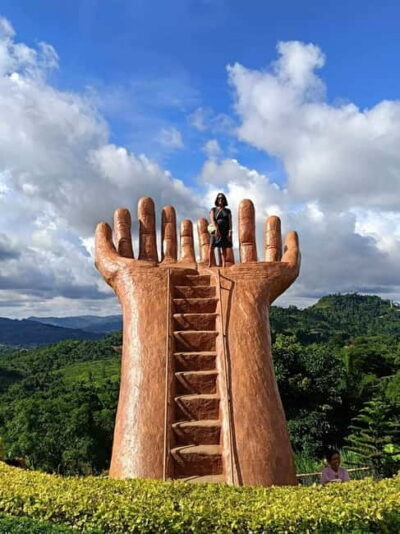
- Photo-friendly garden time at Sirao, with heart-shaped arches and windmills
- A long-but-doable 8 hours across several neighborhoods, mostly without rushing stops
- Admission details vary by stop, so confirm what is covered for your date
A practical, full-day plan starting at 9:00 am
This tour is built for a full day in Cebu City, roughly 8 hours, starting at 9:00 am. You get pickup and drop-off, plus a private air-conditioned car. With a maximum of 6 travelers, you’re not dealing with constant regrouping, and it tends to feel more like a guided day out than a crowded checklist.
The big advantage is that the tour strings together major landmarks that are spread across the city. Doing this solo would likely mean back-and-forth taxis and decision fatigue. Here, the route is already stitched together: forts, churches, heritage monuments, a Chinese-Filipino ancestral house, a national museum, a temple climb, and then a garden that’s basically designed for photos.
The downside of any “highlights” day is time management. Each stop is around 15 to 30 minutes, so you’ll get a good feel but not hours inside every building. Wear comfortable shoes. Bring water. And accept that you’re going to be outside and walking at multiple points.
More City Tours in Cebu
- Cebu City: Whale Shark Swimming & Kawasan Falls Canyoneering
★ 4.7 · 665 reviews - Cebu City: Bohol Countryside Tour with Loboc Cruise Lunch
★ 4.5 · 488 reviews - Private Cebu & Lapu-Lapu City Tour with Uphill Spots & Lunch at House of Lechon
★ 4.5 · 168 reviews
Fort San Pedro: the best early stop for Cebu’s colonial layers
You start with Fort San Pedro, often the most grounding first stop because it’s a real military defense site. It’s described as the oldest military defense structure in the Philippines, built in 1738. The fort has a triangular layout with well-preserved grounds, and there’s a small museum with artifacts.
Why I like placing this first: you get context before you hit the more famous church-and-cross landmarks. Fort San Pedro helps you picture why the city mattered, who fought over control, and how power was organized here long ago.
Time on this stop is about 30 minutes. Admission is listed as not included for this one, even though the overall tour says entrance and admission fees are included. That means you should confirm the details when you book, or plan to pay onsite if needed.
Practical tip: the museum and artifacts can be the star, so don’t spend the whole 30 minutes just taking photos. Give yourself a few minutes to actually look at the displays.
Magellan’s Cross and Basilica del Santo Niño: faith landmarks with serious staying power
Next up are the Christian “anchors” of Cebu City.
Magellan’s Cross
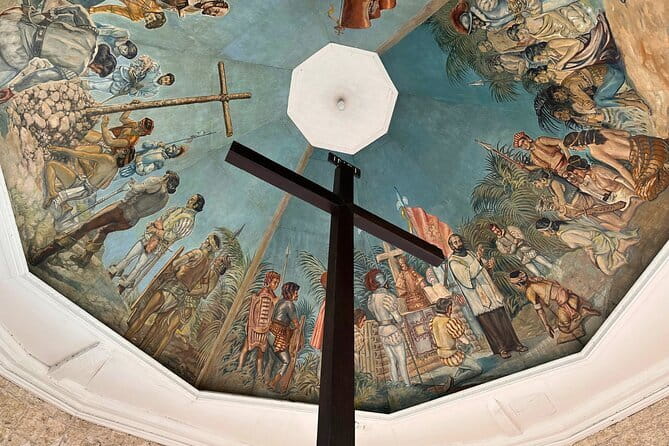
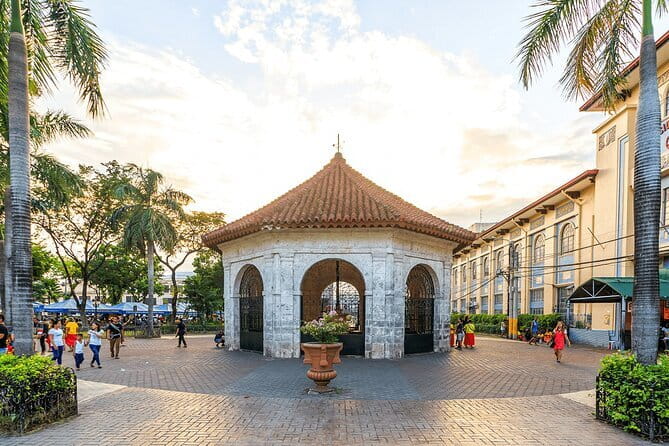
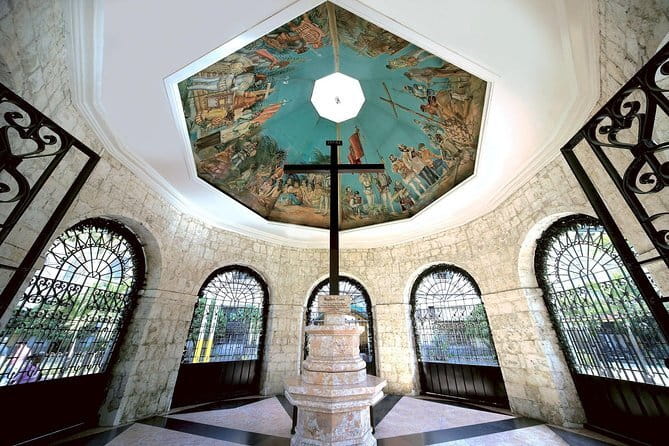
You’ll see Magellan’s Cross, planted in 1521 by Ferdinand Magellan and marking the arrival of Christianity in the Philippines. This stop is short, about 30 minutes, and admission is listed as free.
This is one of those places where the site matters as much as the story. Even if you’re not big on religious history, it’s hard to ignore the centuries of significance packed into a small landmark.
More Historical Tours in Cebu
- The Original Cebu City Historical and Food Walking Tour
★ 4.5 · 81 reviews - Cebu City: Historical Street and Food Tour
★ 4.9 · 31 reviews - Cebu Historic and Views Tour Pickup Dropoff and Lunch (private)
★ 5.0 · 26 reviews - Cebu City Heritage with Uphill Tour
★ 3.6 · 22 reviews
Basilica del Santo Niño
Then you head to Basilica del Santo Niño, described as the oldest Roman Catholic church in the Philippines, founded in 1565. It houses the revered Santo Niño de Cebu statue, which is described as a gift from Magellan to Queen Juana.
You’ll have about 30 minutes here, also marked as free for admission. The basilica is the kind of stop where you can choose your own pace: quick look and photos, or slower observation of the church space and the central statue.
A small caution: church sites can be crowded depending on timing. If it feels busy, focus on getting a respectful view first, then step aside for photos once you have a clearer line.
Heritage of Cebu Monument in the Parian district: history in sculpture form

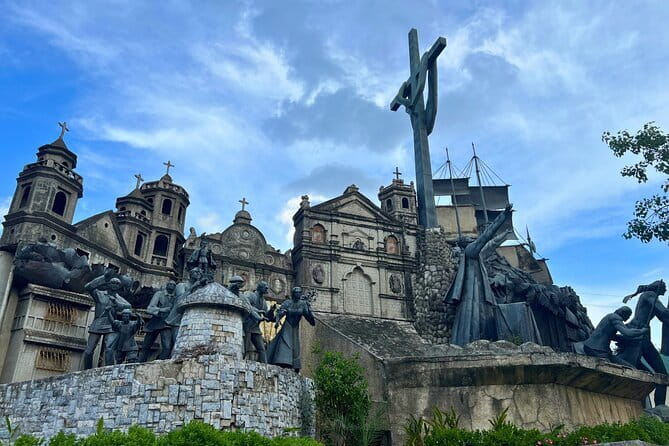
After the church stops, you’ll move to the Heritage Of Cebu Monument in the Parian district. This is a public art stop by local artist Eduardo Castrillo, built as a visual journey through Cebu’s key historical events using sculptures.
Time here is about 15 minutes, with admission listed as free.
I like this stop because it breaks the pattern. Instead of reading a sign or walking through a building, you get history presented in shapes and scenes you can interpret in your own way. It’s also a relief from the heavier indoor time earlier in the day.
If you’re the kind of person who enjoys connecting visual art to real events, give yourself those full 15 minutes. If you rush, it’s easy to miss what makes the monument special.
Yap Sandiego Ancestral House: stepping into a bahay na bato
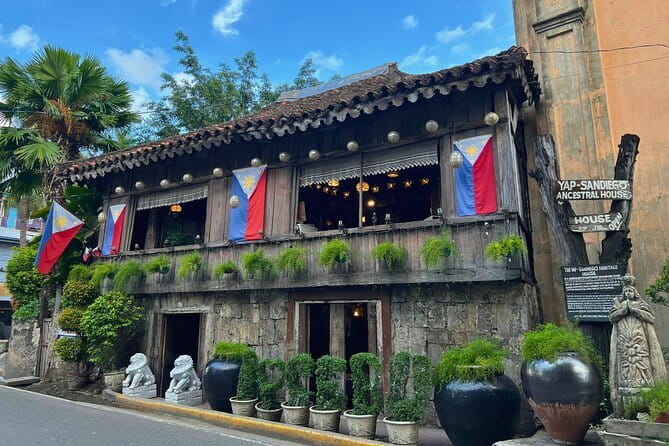
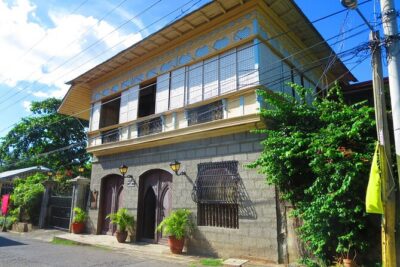
Next is Yap Sandiego Ancestral House, one of Cebu’s oldest residences from the late 17th century. It’s described as a well-preserved bahay na bato, with Filipino-Chinese heritage and rooms filled with antiques and intricate wooden carvings.
You’ll get about 30 minutes here. Admission is listed as not included for this stop, so again, confirm what’s covered for your booking.
Why this stop matters: Cebu isn’t only Spanish and Catholic. The presence of Filipino-Chinese heritage is a huge part of the city’s story. This house gives you that angle in a way a museum label can’t fully replicate. You’re not just learning, you’re seeing how people lived, how rooms were arranged, and how craftsmanship shows up in everyday spaces.
Practical note: if you care about details, look closely at the wooden carvings and household items. You’ll often get more from the first room than you think, so don’t rush past the best parts.
National Museum of the Philippines – Cebu: where facts replace guesses
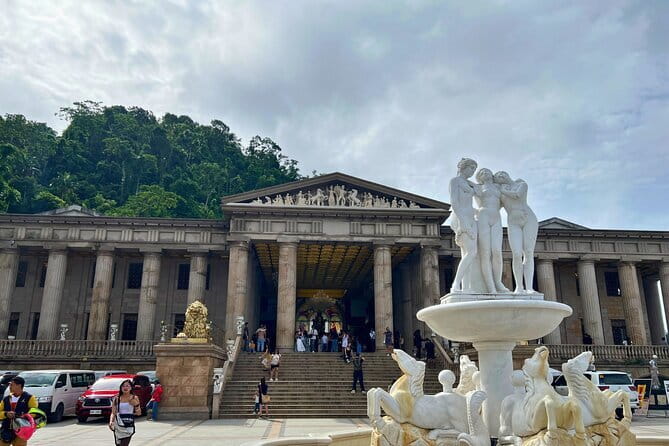
Then the tour moves to the National Museum Of The Philippines – Cebu for about 30 minutes. This stop is described as a must-visit for history enthusiasts, with ancient artifacts, historical documents, and artistic masterpieces.
Admission is listed as free for this stop.
This is your “pause and absorb” stop. After walking through monuments and churches, a museum helps you lock in the story with objects and documentation. You’ll also often find that museums clarify how different periods connect, especially in cities with layered influences like Cebu.
If you want to get the most out of the limited time, focus on one or two sections rather than trying to see everything. Pick what matches your interest most, then read slowly for a few pieces.
Taoist Temple: the 81 steps for both views and a breather
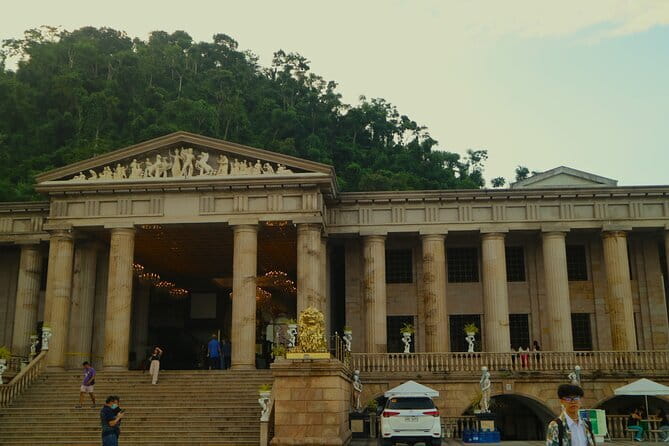
One of the most memorable parts of the day is the Taoist Temple stop. You’ll walk through ornate gates, see dragon sculptures, and climb 81 steps representing the Taoist path to enlightenment.
This stop is about 30 minutes, admission listed as free.
Why it’s a great mid-to-late-day change: it’s not just another church photo. It has its own architecture, its own symbolism, and a physical element that breaks up the mental workload of history reading. Even if you’re not religious, the design and the steps create a strong sense of ritual and atmosphere.
The climb can be the most tiring part of the whole itinerary. Take it slow. Stop if you need to. The goal is to enjoy the view and the details, not sprint to the top.
You’ll likely come back down with a bunch of photos, but don’t forget to look at the dragon sculptures and gates as you go. Those are often the “quiet wins” that people miss.
Sirao Pictoral Garden: flowers, windmills, and heart-shaped arches
The day ends with Sirao Pictoral Garden, a photo-heavy stop that’s built for “you’ll want one more picture” energy. It’s known for Celosia blooms, windmills, and heart-shaped arches, plus mountain views.
Time is about 30 minutes, and admission is listed as not included.
I love garden stops late in the day because your brain gets to switch modes. Earlier you were reading the past. Here you’re enjoying the present, with color, shapes, and views that feel like a reward.
Because it’s a garden, weather matters. This tour also notes a good-weather requirement, so if it’s foggy or rainy, the experience can shift or be rescheduled. If you care about photos, that matters.
Practical tip: bring something light for the sun if you’re going on a bright day. And if you’re traveling solo, this is the easiest place to get strong shots since the arches and windmills make natural backdrops.
Price and logistics: does $75 make sense for 8 hours?
At $75 per person for a roughly 8-hour tour, the value mostly depends on what you’d otherwise spend and how much you hate planning.
Here’s what you get that has real money value:
- Hotel pickup and drop-off
- Transportation in a private air-conditioned car
- A full route of major stops spread across Cebu City
- Entrance and admission fees are listed as included in the tour details
Now the part you should verify: the itinerary marks admission as not included for Fort San Pedro, Yap Sandiego Ancestral House, and Sirao Pictoral Garden. That doesn’t mean the tour is misleading, but it does mean your total out-of-pocket could change depending on what’s covered for your date. When you book, confirm which stops you’ll pay at and which are fully included.
Also note that lunch isn’t included. That’s normal for a city tour, but budget for it. And insurance isn’t included, which is again fairly standard.
The group size cap at 6 travelers is part of the value too. You’ll often get better attention and fewer bottlenecks than bigger tours. One guest praised the guide for taking lots of pictures for a solo visitor, which is the kind of practical service that makes a city day feel easier.
What it feels like on the ground, and who it suits best
This tour is for you if you want a structured, efficient day through Cebu City without spending hours mapping routes or negotiating transport. It works well for:
- First-time visitors who want major sights in one outing
- Solo travelers who like having someone else manage timing and photo opportunities
- Families with kids, since one review called it kid-friendly and worth the time
- History and culture lovers who enjoy a mix of Christian landmarks, museums, and heritage homes
It might not be your best choice if you:
- Want long museum time and deep reading at every stop
- Dislike stairs or get tired quickly with walking and climbing
- Are only interested in one type of attraction, like churches or beaches
A nice detail from the feedback: the guide style can be photo-focused, especially if you’re traveling alone. Joey Jay was specifically praised for helping take pictures, and at least one experience added extra highlights like Tops of Cebu when time allowed. That kind of flexibility can turn a good tour into a great memory.
Should you book this Cebu City heritage and Uphill tour?
I’d book it if you want an organized day that connects Cebu’s landmarks into a logical route. The mix of Fort San Pedro, Magellan’s Cross, Basilica del Santo Niño, a bahay na bato home, a national museum, the Taoist Temple climb, and Sirao’s photo spots gives you a full spectrum of what Cebu City feels like.
But book with eyes open. Confirm which admissions are included versus paid onsite for Fort San Pedro, Yap Sandiego, and Sirao. Also plan for a long day on your feet, and remember the tour runs with a good-weather requirement, so build in backup flexibility if you’re on a tight schedule.
If you like history, views, and getting great photos without having to coordinate every transfer yourself, this is a strong value at $75 for an 8-hour guided loop.
FAQ
What time does the tour start?
The start time is 9:00 am.
How long is the Cebu City heritage tour?
It runs for about 8 hours (approximately).
How much does it cost?
The price is $75.00 per person.
Is hotel pickup and drop-off included?
Yes. Hotel pickup and drop-off are included.
What is the group size limit?
The tour has a maximum of 6 travelers.
Is lunch included?
No. Lunch is not included.
Are entrance fees included?
The tour details say entrance and admission fees are included, but the itinerary lists tickets as not included for Fort San Pedro, Yap Sandiego Ancestral House, and Sirao Pictoral Garden. Confirm what is covered when you book.
Is the tour dependent on weather?
Yes. The experience requires good weather. If it’s canceled due to poor weather, you’ll be offered another date or a full refund.
What is the cancellation policy?
You can cancel for a full refund if you cancel up to 24 hours in advance of the experience start time.
Is a mobile ticket used?
Yes. Mobile ticket is part of the tour features.
Newest reviews around Cebu
- From Cebu: Bohol Countryside Private Tour & Loboc River Cruise★ 4.0 · 3 reviews
- Small Group Moalboal and Badian’s Ultimate Adventure Tour★ 5.0 · 3 reviews
- Full-Day Bohol Excursion – depart Cebu (Best Seller)★ 4.0 · 3 reviews
- BEST OF CEBU: Cebu City Heritage Tour Shared-Joiners★ 4.5 · 3 reviews
- Oslob Whale Shark Snorkeling & Kawasan Canyoning Tour★ 5.0 · 3 reviews
- Oslob Whalesharks & Aguinid Falls w/ Sumilon Sandbar (3in1)★ 3.5 · 3 reviews
- Bluewater Sumilon Day Pass★ 5.0 · 3 reviews
- Cebu Private Tour 3 Islands Hopping Gilutungan Caohagan Nalusuan★ 4.5 · 3 reviews
Historical Tours, compared.
Intramuros, Manila: Historical Bamboo Bike Tour
Read our review →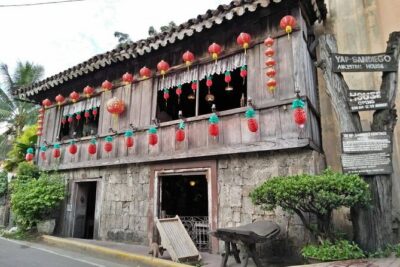
The Original Cebu City Historical and Food Walking Tour
Read our review →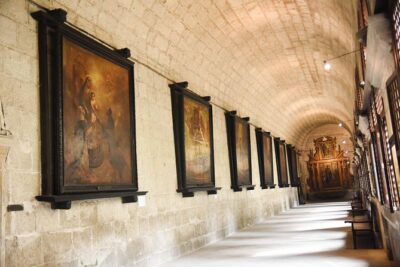
Explore Intramuros: Introduction to Philippine History
Read our review →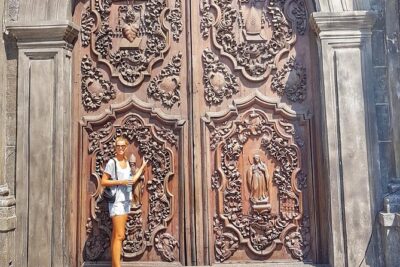
Experience Manila’s Heritage: Intramuros & More in Half a Day!
Read our review →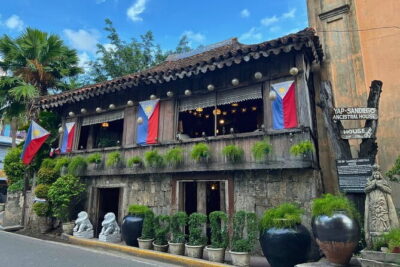
Exploring Cebu City’s rich history and Uphill Tour
Read our review →
Tagaytay, Taal Volcano & Heritage Town: A Journey of Discovery
Read our review →Browse the lists this tour appears in