
Reviewed · CITY TOURS
Private 5-Hour Cebu City Tour with Lunch
Cebu City has a way of stacking cultures on top of each other, and this half-day private tour is a smart way to see it in one shot. You get a walk through the city’s religious landmarks, plus Spanish-era history and Chinese heritage, all with hotel pickup and a private guide.
I like that the itinerary is built around story points, not just checkboxes. Fort San Pedro’s calm courtyard, the Basilica del Santo Niño, and the Casa Gorordo Museum each explain a different side of Cebu, and lunch is included so your day stays on pace.
One drawback to keep in mind is that, because it’s private but still time-tight, you should pay attention to how your guide keeps the group moving. On occasions when the guide doesn’t stay with the group, you can end up doing more self-guided wandering and less guided history.
Key things to know before you go
- Private group up to six with a dedicated guide, so you can ask questions and set a comfortable pace
- Four major stops in about five hours, with entrance fees included at each site
- Cebu’s layered past from Chinese heritage at the Taoist Temple to Spanish influence at Fort San Pedro
- Magellan’s Cross and the Basilica are close enough to feel connected, not rushed
- Casa Gorordo Museum focuses on how elite families lived, using Mactan coral stone and Philippine hardwood
- Lunch included helps you avoid scrambling for food between landmarks
Why this Cebu City loop works so well
This tour makes sense for first-timers because it follows the logic of Cebu’s old center and nearby landmarks. You start with Spanish-era and church history, then add Portuguese and Spanish ties to Magellan’s arrival, and finish by stepping into Chinese heritage.
I also like how the stops cover both public monuments and lived-in spaces. You’re not only looking at statues and forts, you’re seeing how people built homes and practiced faith, from a hardwood house restored to period style to a basilica tied to centuries of devotion.
The whole experience is built for a half-day rhythm. You get enough time at each place to actually notice details, but not so much time that you feel stuck when traffic or weather shifts.
More City Tours in Cebu
- Cebu City: Whale Shark Swimming & Kawasan Falls Canyoneering
★ 4.7 · 665 reviews - Cebu City: Bohol Countryside Tour with Loboc Cruise Lunch
★ 4.5 · 488 reviews - Private Cebu & Lapu-Lapu City Tour with Uphill Spots & Lunch at House of Lechon
★ 4.5 · 168 reviews
Pickup, timing, and what the 5 hours feels like
Your tour starts in the morning with hotel pickup in Cebu City. The duration is about five hours, and transfer times are approximate, which matters in a city where traffic can change your schedule.
The good news is the route is compact. You’ll spend your time where the story is, not trapped in long-distance travel, and the day is set up to include round-trip transport so you do not have to plan logistics mid-visit.
Dress code is smart casual. If you plan to visit places of worship, bring a light layer, even if it looks warm, because indoor spaces can feel cooler and humidity can hit you after you step outside again.
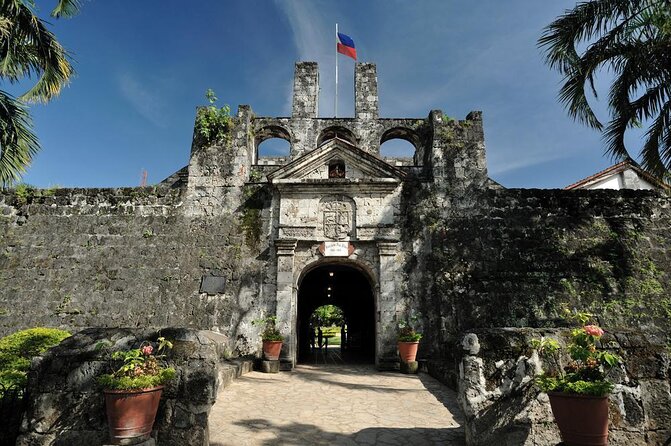
Stop 1: Fort San Pedro’s courtyard, Spanish defenses, and the calm you don’t expect
Fort San Pedro is the starting point, and it’s a strong choice for warming up your historical context. This Spanish fortification was founded in 1565, and today it’s known for a tranquil inner courtyard that gives you a breather right in the middle of a busy city.
What I like here is the contrast. A fort sounds aggressive, but the way the site is laid out makes it easier to look around and take in Cebu’s geography and defensive thinking without feeling overwhelmed.
If your guide is on top of the story, you’ll also come away understanding why forts mattered in the first place, especially during the era when European powers were competing across sea routes. Even if you are not a history buff, you can still enjoy the courtyard atmosphere and the overall sense of place.
Stop 2: Basilica del Santo Niño and Magellan’s Cross, right when the story clicks
From Fort San Pedro, the tour moves into Cebu’s religious heart. You’ll visit the Basilica del Santo Niño, founded in 1565, and it houses a revered 16th-century statuette of the Christ child known as Santo Niño.
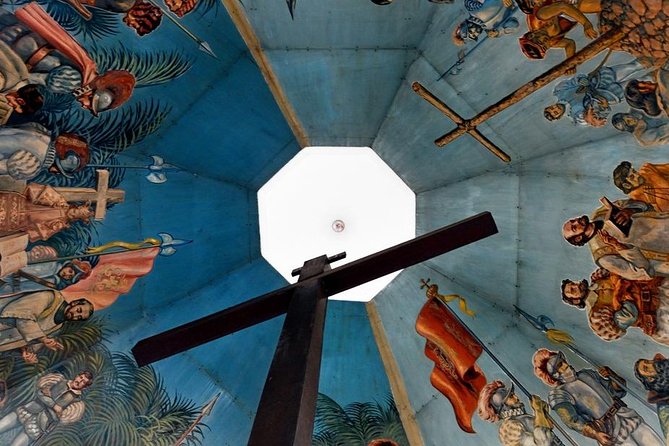
Across the street you’ll see Magellan’s Cross, associated with Portuguese and Spanish explorers under orders from Ferdinand Magellan upon arrival in Cebu in 1521. Because these sights sit so close, the connection between faith, early European contact, and local history feels immediate rather than scattered.
Practical tip: keep your head up and take a moment to look at how the streets and buildings shape the experience. These are landmarks you photograph easily, but they make more sense when you notice how the area functions like a living neighborhood, not just a monument zone.
Also, this is a great stop for families. The basilica visit is structured and meaningful, and the nearby crossing makes it easy to move from one focal point to the next without stress.
More Lunch Experiences in Cebu
- Cebu Moalboal: Kawasan Canyoneering Adventure with Lunch
★ 4.9 · 630 reviews - Canyoneering Experience in Kawasan Falls with Lunch
★ 5.0 · 440 reviews - Cebu: Kawasan Falls Canyoneering Tour with Ziplining & Lunch
★ 4.8 · 259 reviews - Bohol Countryside Day Tour From Cebu City | Lunch at Loboc River Cruise
★ 4.5 · 157 reviews
Stop 3: Casa Gorordo Museum, hardwood houses, and what elite life looked like
Next up is the Casa Gorordo Museum, located in a private home built in the 1850s for a wealthy family. The house was built using Mactan coral stone and pure Philippine hardwood, and it’s been restored and furnished in period style.
This is the stop that often surprises people. Statues and forts are easy to understand as tourist sights, but a house gives you a different kind of education. You start noticing how materials mattered, and how the design choices reflect daily life for the mid-19th-century elite.
What I like most is that you are not just looking at architecture. The museum setting helps you imagine routines, social spaces, and how status showed up in the way homes were built and furnished.
If you want an authentic Cebu perspective, this is the moment to slow down a little and actually read the room layout. Even without lots of complex explanations, the house teaches through its physical design.
Stop 4: Taoist Temple and the Carbon Market pass-by, Chinese heritage outside the center
Your final stop is the Cebu Taoist Temple, about four miles (6 km) outside the city center. It was built by the city’s Chinese community in the 1970s, and the colorful gate is designed to echo the Great Wall of China, with sinuous dragons and tiered roofs.
This part of the day also adds texture to your Cebu experience because you pass the Carbon Market. Vendors bring fresh produce from around the island, and while you might not shop in a big way, you get a real sense of where food supply and everyday commerce intersect.
Inside the temple, take your time at the entrance details first. That gate design is the kind of landmark element that becomes easier to appreciate once you understand the cultural reference points behind it.
This stop is also a reminder that Cebu’s identity is not one single story. It’s layered, and you’re seeing two different community histories on the same half-day itinerary.
Lunch plus entrance fees: what’s covered and how it changes your day
Lunch is included, along with entrance fees and local taxes. That matters because Cebu sightseeing can add up quickly once you start stacking individual tickets and then paying for transport plus meals.
I like that lunch is not an afterthought. When your tour includes food, you spend less time negotiating where to eat and more time keeping your day moving smoothly.
A note on pacing: because there are four major stops and each has about an hour allocated, lunch usually fits into the natural flow of the route rather than creating a long sit-down break. If you prefer a relaxed meal, you may want to ask your guide if there’s any flexibility in timing once you know how the day is running.
Souvenir photos are available to purchase, but they are not included. If you like buying memory prints, keep that in mind so it does not feel like an unexpected add-on later.
Price and value: is $91.03 a fair deal?
At $91.03 per person, this tour is priced like a short, guided experience that bundles what you would otherwise plan separately. For that price you get a professional guide, lunch, entrance fees at every stop, and round-trip transport from Cebu City hotels.
Here’s how to think about value. If you were to do these sites on your own, you would likely spend money on individual tickets, then add transport costs and the time it takes to coordinate. Paying per person for a private guide is often worth it when the landmarks have lots of context, like a fort’s role in Spanish-era defenses or a basilica tied to a 16th-century devotion.
Group size also affects how the experience feels. With a maximum of six travelers, you get the benefits of privacy without it turning into a big bus scene. If you are traveling as a small family or a compact group of friends, this price can feel very fair.
If you are solo, the tour is still private, but you’ll be paying the per-person rate without the built-in cost sharing a group creates.
The guide factor: what to do to protect your experience
This tour is only as good as the guiding. In one past experience, a guide named Edwin was praised for making Cebu history genuinely interesting and for delivering a good lunch stop. In another reported situation, a guide did not stick with the group at the sites, then quickly moved people to a buffet that felt disappointing and overpriced.
You cannot control who you get. But you can control your expectations and your next step.
When you meet your guide, ask one simple question: how will you handle time at each stop, and where will lunch be served? If the answer is clear, you are set up for a smooth day.
Also, if you find yourself standing alone at a site, say something. This is a private tour. If your guide steps back, it is okay to request a bit more guidance so you get the history context you paid for.
A quick practical mindset helps too. Keep your questions ready, because the best moments tend to be when the guide explains the why behind what you are seeing.
Who this tour suits best
This is a great fit if you want a first-time orientation to Cebu City. You will see the religious landmarks, the Spanish military story, a museum focused on everyday elite life, and Chinese heritage sites without needing to map everything yourself.
It’s also family friendly, and the pacing is reasonable for people with moderate physical fitness. The stops are spread out by short driving, and each location is given a focused block of time rather than turning into a long walking day.
If you prefer a tour with narration and context, this setup works well because the itinerary naturally supports explanations.
If you are the type who wants hours of free time at only one location, you might find the tight schedule limiting. This is built as a balanced circuit, not a deep study of one site.
Should you book this Cebu City private tour?
I would book this tour if you want a guided half-day that gives you a clear picture of Cebu’s layered past, and you value having lunch and entrance fees handled. The combination of Fort San Pedro, the Basilica del Santo Niño, Magellan’s Cross, Casa Gorordo Museum, and the Taoist Temple is efficient, and it covers the kinds of contrasts that make Cebu feel like more than one place.
Skip it, or ask extra questions before you commit, if you know you want very relaxed pacing, or if you feel strongly about how lunch choices should be made. With a schedule this tight, a good guide matters. Your best move is to confirm the plan early and make sure the group stays together at each stop.
FAQ
What is the duration and start time of the tour?
The tour runs for about 5 hours and starts with morning hotel pickup, with the listed start time of 8:30am.
Is this a private tour, and how many people can join?
It is private for your group, with a maximum of 6 travelers.
What stops are included in the itinerary?
You visit Fort San Pedro, Basilica del Santo Niño and Magellan’s Cross, Casa Gorordo Museum, and the Cebu Taoist Temple. You also pass by the Carbon Market.
Does the price include hotel pickup and drop-off?
Yes. Hotel pickup and drop-off are included for hotels located within Cebu City.
What does the tour price include, and what is not included?
Included are a professional guide, lunch, local taxes, entrance fees, and round-trip transport from Cebu City hotels. Souvenir photos are not included.
Is lunch included, and what should I expect?
Lunch is included in the tour. Exact lunch style is not specified in the tour details, so expect it to be a planned stop within the half-day schedule.
Can I cancel for a full refund?
Yes. You can cancel up to 24 hours in advance for a full refund. If you cancel less than 24 hours before the start time, the amount paid is not refunded.
Newest reviews around Cebu
- From Cebu: Bohol Countryside Private Tour & Loboc River Cruise★ 4.0 · 3 reviews
- Small Group Moalboal and Badian’s Ultimate Adventure Tour★ 5.0 · 3 reviews
- Full-Day Bohol Excursion – depart Cebu (Best Seller)★ 4.0 · 3 reviews
- BEST OF CEBU: Cebu City Heritage Tour Shared-Joiners★ 4.5 · 3 reviews
- Oslob Whale Shark Snorkeling & Kawasan Canyoning Tour★ 5.0 · 3 reviews
- Oslob Whalesharks & Aguinid Falls w/ Sumilon Sandbar (3in1)★ 3.5 · 3 reviews
- Bluewater Sumilon Day Pass★ 5.0 · 3 reviews
- Cebu Private Tour 3 Islands Hopping Gilutungan Caohagan Nalusuan★ 4.5 · 3 reviews
City Tours, compared.

Whale Shark Swimming & Kawasan Falls Canyoneering
Read our review →
Bohol Countryside Tour with Loboc Cruise Lunch
Read our review →
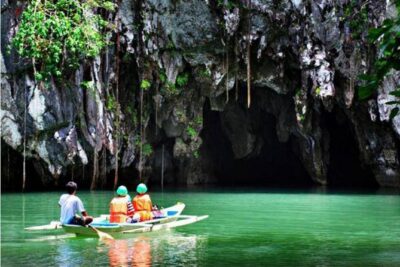
Underground River Day Trip from Puerto Princesa City
Read our review →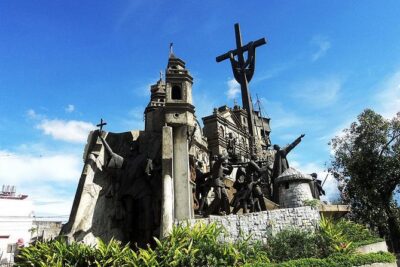
Private Cebu & Lapu-Lapu City Tour with Uphill Spots & Lunch at House of Lechon
Read our review →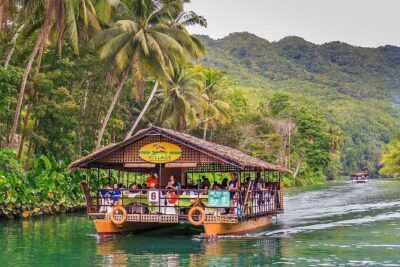
Bohol Countryside Day Tour From Cebu City | Lunch at Loboc River Cruise
Read our review →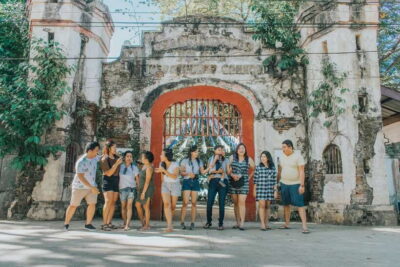
Full-Day Manila City, Tagaytay Taal Volcano and Lake Tour
Read our review →Browse the lists this tour appears in