
Reviewed · MANILA CHINATOWN
Manila Food Tour: Explore World’s Oldest Chinatown
Binondo, Manila’s world’s oldest Chinatown, has a feel that you cannot get from a quick drive-by. This 3-hour food walk is a simple way to taste the Chinese-Filipino flavors that made the neighborhood famous, without guessing where to go or what to order. I especially like the small-group format and the fact that you get a real sequence of stops that keeps things interesting. I also like that you start at the landmark Binondo Church, so your walking route makes sense from the first minute.
Two things to love: you try eight different snacks and dishes, and you get the kind of guided pacing that helps you eat in busy spots without feeling lost. The main drawback is also pretty obvious: you are walking, and you are eating. Come with an empty stomach, and if you do not do well with meat or you are strictly vegan, this tour may not work for you.
Key highlights you will actually care about
- Small-group vibe: capped for a manageable group size, so you are not stuck in a line of strangers.
- Eight food stops: a mix of sweet and savory, designed to keep you full but not overwhelmed.
- Binondo Church start: an easy-to-find meeting point that anchors the walk.
- Chinese-Filipino comfort classics: lumpia, mami noodle soup, dumplings, dim sum, and hopia.
- Real local-navigation help: you get tables in popular spots and faster ordering through the guide’s connections.
- Food and drink included: soft drinks, tea, water, plus bottled water are part of the deal.
Binondo on foot, not on autopilot
Manila can feel like a swirl of motion. Binondo slows that down in a good way. You come for the food, but you stay for the neighborhood texture, the mix of cultures, and the sense that everyday life still runs through these streets.
What makes this tour smart is the structure. You do not bounce randomly between restaurants. Instead, you follow a planned route that moves from well-known points to food counters and small dining rooms. That matters because Chinatown food is not just about flavor. It is about timing, queues, and knowing which counter is doing the freshest version right now.
Also, you are not paying extra to figure it out. At $60 per person, the value comes from bundled tastings plus guidance that saves you time and prevents the common tourist problem: ordering one safe dish and missing the area’s real signature foods.
More Food & Drink in Manila
- Manila Food Tour: Introduction to Philippine Street Food
★ 5.0 · 417 reviews - Manila: Street Food and Drinks Walking Tour with Tastings
★ 4.8 · 114 reviews - Manila: Sightseeing and Food Walking Tour with Tastings
★ 4.7 · 68 reviews
Where it starts: Binondo Church and a route that makes sense
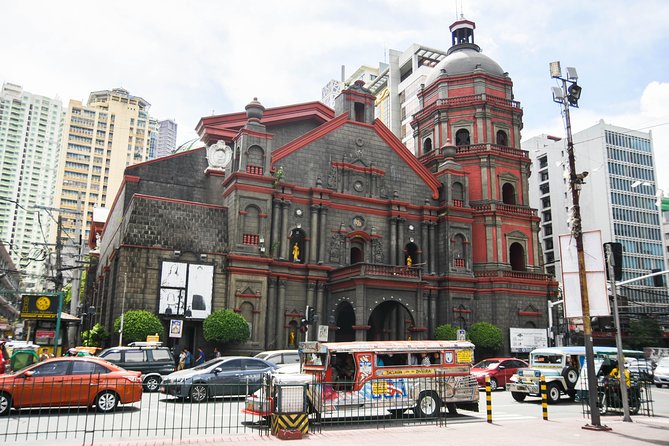
You meet at Minor Basilica and National Shrine of Saint Lorenzo Ruiz, also called Binondo Church, on Plaza Lorenzo Ruiz in Binondo. This is the kind of meeting point that makes your life easier. It is a clear landmark, and it is near public transportation, so you can arrive without a complicated transfer plan.
Once you’re in motion, the tour becomes a guided “food map” for the area. You begin near Carvajal Street, where the aromas cue you in fast. If you have never been to Binondo before, you can still follow along because your guide keeps the flow simple: here is what you will eat, where you will eat it, and why it belongs in this neighborhood.
Stop by stop: what you will eat and why each part works
This is not a single-dish demo. The point is variety. You sample a mix of sweet and savory foods, and the stops are spaced so you can digest, walk, and actually enjoy what comes next.
Stop at Binondo Church: warm-up with lumpia and Kuchay Ah Pie
The walk starts at Binondo Church, then the first tastings kick in around the nearby food streets. The early highlights include fresh lumpia and Kuchay Ah Pie.
Lumpia is one of those foods that sounds familiar, but the Binondo version often tastes different because the wrappers are fresh and the fillings are built for street-style eating. You get the kind of crunch and balance you would not get if you only tried a packaged version later.
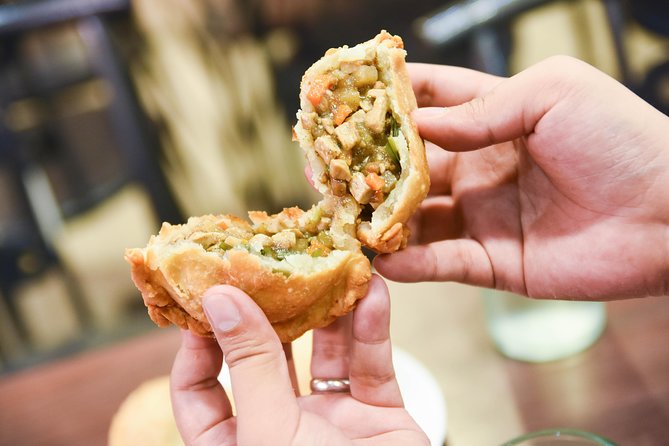
Kuchay Ah Pie is another great start because it sets the theme: Chinese-Filipino snack culture is not copy-paste. It is adaptation. You get a pastry-style bite built around a savory profile, and it gives you something different before you move on to dumplings and noodles.
Practical note: if you do this in the morning, you will enjoy it more. One review tip was blunt and useful, do not eat breakfast beforehand. That advice holds up because the snacks are filling, and the next stops ramp up fast.
More of Manila Chinatown:
- Manila: Intramuros, Chinatown, and Old Manila Half-Day Tour
★ 4.8 · 475 reviews - Manila: Guided Food Tour of Binondo with Tastings
★ 4.8 · 38 reviews - Manila: Binondo Chinatown Guided Walking Tour
★ 5.0 · 27 reviews - Manila: Chinatown Nighttime Tour by Tuk-Tuk
★ 5.0 · 13 reviews
The dumpling stop: handmade comfort, made for a line
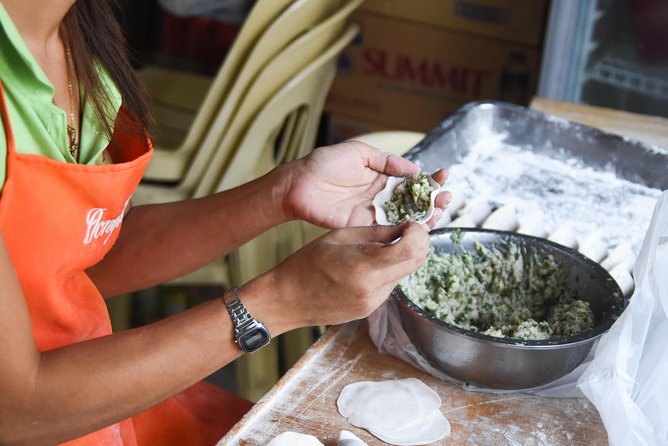
Next comes the dumpling portion, where the food is treated like craft. You are not just buying dumplings off a menu. You are tasting handmade dumplings, and that makes the texture part of the experience.
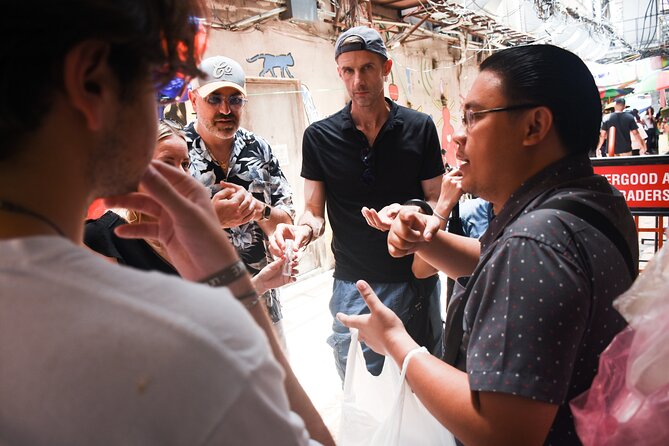
This is where the guide’s role really matters. Many dumpling shops are busy, and queues can look intimidating. Your guide’s connections can help you get served without stalling your whole tour. More importantly, you get the context for what you are eating, so you can notice details like thickness, filling balance, and how the dumpling cooks differently depending on the place.
If you love dumplings, this is the stop to look forward to. People who rate the tour highly often point to the dumplings as the reason they would repeat it.
Mami noodle soup: Filipino comfort with a Chinatown backbone
After dumplings, you hit mami, a noodle soup that sits right in the middle of Filipino comfort food. This stop is valuable because it anchors the story of Binondo as more than a Chinese theme. Mami is familiar to Filipinos, but in Chinatown you can taste the influence in the ingredients and the approach.
You get the warmth you need in the middle of a walking tour. It also changes the pace. After crisp snacks and chewy dumplings, soup lets you slow down and reset your stomach before dim sum and sweets.
Classic dim sum: small plates that feel like a lesson
Then you arrive at a classic dim sum stop. Dim sum is the big-name label, but what matters here is that you are not picking dishes at random. You are tasting as part of a guided sequence.
Dim sum works well for a food tour because it is shareable, quick, and varied. You can sample, compare textures, and still keep moving. It also gives you a taste of the dining culture in Binondo: the food is meant to be eaten together, ordered in small amounts, and enjoyed without overthinking it.
The bakery finish: hopia and the sweet capstone
You end at a historic bakery famous for hopia. This is a great choice for a food tour ending because hopia is the right kind of souvenir you can keep thinking about after the walk.
You sample a variety of hopia flavors, wrapped up in flaky pastry. It is also a helpful finale because you close the tour with sweetness and structure after savory bites. This final stop is where the Chinese-Filipino flavor story shows up most clearly, because hopia is both familiar in the Philippines and unmistakably tied to Chinese pastry traditions.
If you have a sweet tooth, you will remember this part.
The pacing: how the route avoids food overload
A good food tour has two jobs: you should eat enough to feel satisfied, and you should not feel sick by the final stop.
This one usually hits that balance by keeping the total time around 3 hours and using multiple tasting sizes instead of one giant meal. The walking pace is also part of the design. You are moving through the neighborhood, but you are not sprinting between stops.
Also, the tour loops back to the meeting point, so you are not stuck figuring out how to get home from a random restaurant.
A personal-sounding tip that is worth your attention: wear walking shoes. People consistently mention shoes, and it makes sense. Binondo’s streets are not built for slow, polite strolling in dress shoes. You want grip and comfort.
Price and value at $60 for eight tastings
Let’s talk dollars. At $60 per person, you might think it is pricey for street food. Here is why it can still feel like good value.
You are not just buying food items. You are buying:
- Eight different food items, including sweet and savory
- soft drinks, tea, and water as part of the package, plus bottled water
- a guide who handles the flow, including getting you into busy spots efficiently
If you tried to do this on your own, you would likely spend more time finding each place, ordering, and then realizing you missed the best version of something that locals order first. The tour reduces that guesswork.
Group size also supports value. This is described as a small group experience with a max of 10 in the concept, and the activity info lists a maximum of 15 total. Either way, you are not dealing with a huge crowd. Smaller groups usually mean less chaos when you are eating at counter service places.
One more practical point: the experience has been booked multiple times in the last week. That is a sign the format works, and it often means dates can sell out or specific time slots fill quickly. If you are set on going, do not wait until the last day.
Drinks, allergies, and the vegan question
This tour is not suitable for vegans, based on the info you are given. It also includes snacks that may contain meat or animal-based ingredients depending on the dishes.
What you can do if you have restrictions is ask in advance. The tour has handled different needs in real groups, and reviews mention guides being accommodating. One thing I like about this setup is that you are not being shoved into a rigid tasting menu where nobody cares if you can eat it. Still, do not assume. If you have allergies, confirm specifics before you show up.
Also, because drinks are included (soda/pop soft drinks, tea, and water), you are less likely to get surprise costs mid-walk.
Guides can make or break a food tour, and here it sounds like the guides deliver
This tour consistently pairs food with context. Guides listed in real experiences include Nel, Jian, Chloe, Jenelle, and Rian.
What I like about that lineup is the variety of leadership styles, but the shared pattern is clear: you are not just handed plates. You get stories about Chinatown life and the reasons behind the foods. That turns what could be a random snack crawl into something you can remember.
One review also noted a guide helped manage leftover packaging carefully so the feast could keep going later. That is a small detail, but it matters when you get full fast.
Practical tips so you enjoy it, not just survive it
If you want this tour to feel fun instead of forced, here are the details to plan around:
Eat light before you go
This is the big one. Do not plan a normal breakfast if you are doing a morning tour. You can always eat later. This tour is designed to fill you.
Bring your appetite, and plan for leftovers
Even if you think you can handle snacks, eight tastings add up. Many people end the tour stuffed, and some end with wrapped food to keep.
Wear good shoes
You will walk. You will stand. You will move from stop to stop with the group, and Chinatown streets can be uneven. Comfort wins.
Come prepared for weather
This experience requires good weather. If it is canceled due to poor weather, you will be offered a different date or a full refund. In Manila, that matters because rain can change walking comfort fast.
Bring cash only if you plan to buy more
The included portion covers the tastings and drinks, but if you want extra snacks or souvenirs like additional hopia, having a little spending money helps.
Who should book this tour
This tour is a great match if you want:
- a guided way to eat your way through Binondo
- classic Chinese-Filipino foods like lumpia, dumplings, mami, dim sum, and hopia
- a compact time commitment of about 3 hours, then freedom for the rest of your day
You will likely love it if you are traveling solo or as a couple because the pacing is tight and the group size stays small. It also works for locals who want a different angle on familiar foods, because you are usually tasting better versions and hearing how the dishes fit the neighborhood.
If you are vegan, skip it. If you have heavy mobility limits or you need lots of seating time, you might find the walking part challenging, because there is no mention of special transport during the tour and it is designed around foot stops.
Should you book this Binondo Chinatown food tour?
Yes, if you want the easiest way to experience Manila’s oldest Chinatown through food, not through guesswork. The price is reasonable for eight included tastings plus drinks, and the small-group setup makes it feel personal.
Book it especially if:
- you want lumpia, dumplings, mami, dim sum, and hopia in one smooth route
- you like tours that connect the food to neighborhood context
- you prefer walking tours that end near where you started
Skip it if:
- you are strictly vegan
- you hate walking and standing for short periods
- you only want one or two bites, because this is built to feed you.
If you have a good weather window and an empty stomach plan, this is one of the best ways to spend a half-day in Binondo.
FAQ
How long is the Manila Food Tour in Binondo?
The tour runs for around 3 hours.
Where does the tour start?
It starts at Minor Basilica and National Shrine of Saint Lorenzo Ruiz (Binondo Church), 1006 Plaza Lorenzo Ruiz, Binondo, Metro Manila.
Does the tour end at the same place?
Yes, the activity ends back at the meeting point.
How many people are in the group?
It is listed as a small group tour with a maximum of 10, and it also lists a maximum of 15 travelers for the activity.
What food is included in the tour?
You get snacks covering 8 different food items, including sweet and savory choices.
Are drinks included?
Yes. Soda or pop soft drinks, tea, and water are included, plus bottled water.
Is transportation included?
Private transportation is not included.
Is the tour suitable for vegans?
No, it is not suitable for vegans.
What is the weather requirement?
The experience requires good weather. If it is canceled due to poor weather, you will be offered a different date or a full refund.
What is the cancellation policy?
You can cancel for free up to 24 hours in advance of the experience for a full refund. If you cancel less than 24 hours before, the amount you paid will not be refunded.
Newest reviews around Manila
- TAGAYTAY DAY TOUR FROM MANILA★ 5.0 · 3 reviews
- 3 Days Private Tour in Banaue Ifugao visiting Batad Rice Terraces★ 3.5 · 3 reviews
- 4 Day Banaue Ifugao Rice Villages Private tour Trekking★ 4.5 · 3 reviews
- Bites and Sights: Tagaytay Food and Nature Excursion from Manila★ 4.0 · 3 reviews
- Embark on a 7-Day Banaue-Sagada Adventure of a Lifetime★ 5.0 · 3 reviews
- Philippines Intro 3 days 2 nights Tour Best of Manila and Beyond★ 5.0 · 3 reviews
- Following the Footsteps of Anthony Bourdain★ 5.0 · 3 reviews
- Tagaytay: Taal Volcano Tagaytay Private Tour w/Jeepney Ride★ 5.0 · 3 reviews
Manila Chinatown, compared.
Intramuros, Chinatown, and Old Manila Half-Day Tour
Read our review →
Intramuros, Chinatown, and Old Manila Half-Day Tour
Read our review →
Intramuros & Chinatown Manila Tour – Walking, Food & Culture
Read our review →
Browse the lists this tour appears in